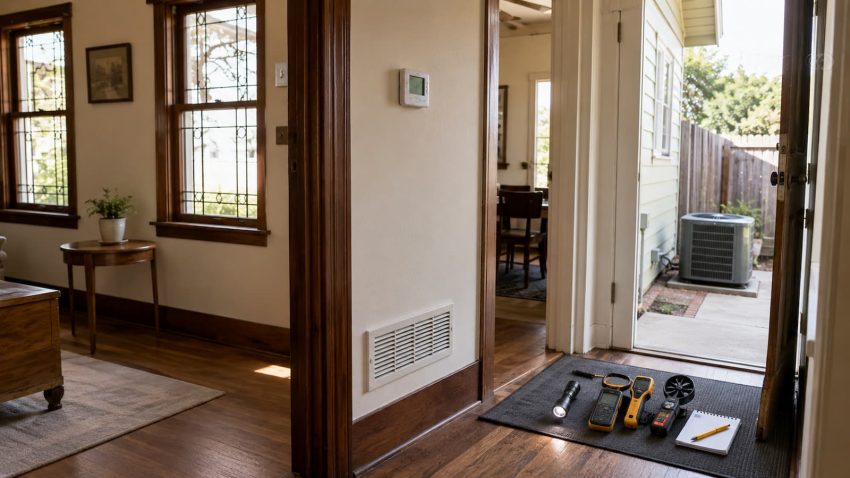
Older homes have a personality that newer construction rarely matches. The original woodwork, thicker walls, unique room layouts, covered porches, plaster details, and sometimes even slightly imperfect floors all tell a story. But when summer heat arrives, especially in warm climates like Southern California, that charm can come with a very practical problem: the house may simply not cool the way a modern homeowner expects.
Many older homes were built before central air conditioning became common. Others had HVAC systems added later, sometimes in stages, sometimes by different contractors, and sometimes with ductwork squeezed into whatever space was available. The result can be a home that looks beautiful but feels uneven: one bedroom turns into an oven, the living room never quite reaches the thermostat setting, and the hallway feels like a different climate zone altogether.
That does not mean homeowners need to choose between preserving character and staying comfortable. In many cases, the best solution is not the biggest system or the most aggressive remodel. It is a smarter approach: understanding how the house behaves, identifying the weak points, and upgrading cooling in a way that respects the home’s structure. For homeowners who want guidance from a local professional, working with an HVAC company in Glendale CA can help turn an uncomfortable older home into a more efficient, livable space without unnecessary disruption.
The key is to think of cooling as a whole-home system, not just a machine outside and a thermostat on the wall. Insulation, air leaks, duct condition, attic temperatures, window exposure, equipment sizing, and airflow all matter. A beautifully maintained older home can still waste a surprising amount of cooled air if the ducts are leaking, the return air is undersized, or the attic is poorly ventilated. Even small problems can create major comfort issues when temperatures climb.
Homeowners also need to know when a problem is not just “old house behavior” but a sign that the system needs attention. Strange noises, short cycling, weak airflow, warm air from vents, sudden spikes in energy bills, or rooms that no longer cool the way they used to should not be ignored. When those symptoms appear, professional HVAC repair in Glendale can help identify whether the issue is electrical, mechanical, refrigerant-related, duct-related, or caused by poor system balance.
Why Older Homes Often Struggle With Cooling
The first reason is simple: older homes were not always designed around mechanical cooling. Before air conditioning became standard, homes relied on shade, cross ventilation, ceiling height, window placement, and building materials to manage heat. Those design features still matter, but they may not be enough for today’s expectations, especially when heat waves become longer and household electronics add more internal heat.
Another issue is layout. Older homes often have smaller rooms, more walls, narrow hallways, additions built at different times, and converted spaces such as enclosed porches, finished attics, or garage conversions. These spaces may not have been included in the original HVAC plan. If the system was expanded without proper load calculations, airflow can become uneven and inefficient.
Ductwork is another major factor. In many older homes, ducts run through attics, crawl spaces, closets, or wall cavities that were never intended for modern HVAC. Ducts may be undersized, poorly sealed, crushed, disconnected, or insulated with outdated materials. Even if the air conditioner itself is fairly new, old ductwork can waste energy and leave parts of the home uncomfortable.
Then there is the building envelope: the barrier between indoors and outdoors. Older windows, unsealed gaps, attic bypasses, recessed lighting openings, worn weatherstripping, and poorly insulated walls can let heat enter and conditioned air escape. This does not always mean the home needs a major renovation. Often, targeted sealing and insulation improvements make a noticeable difference.
Start With Observation Before Spending Money
Before replacing equipment or opening walls, homeowners should pay attention to what the home is already telling them. Which rooms are hottest? Does the problem happen all day or only in the afternoon? Are upstairs rooms worse than downstairs rooms? Does airflow feel weak at certain vents? Does the system run constantly but never catch up?
These observations help separate equipment issues from building issues. For example, a west-facing bedroom that gets direct afternoon sun may need window treatments, sealing, insulation, or duct balancing. A room with almost no airflow may have a duct restriction or design problem. A whole home that feels humid, stuffy, or never cools properly may have an equipment or sizing issue.
A simple homeowner checklist can include:
- Checking and replacing dirty air filters.
- Making sure supply vents are open and not blocked by furniture.
- Looking for obvious duct damage in accessible attic or crawl space areas.
- Noting whether the outdoor unit is blocked by debris or vegetation.
- Listening for unusual noises when the system starts or stops.
- Comparing temperature differences between rooms.
- Watching how long the system runs during hot afternoons.
These steps will not replace a professional diagnosis, but they help homeowners communicate clearly when calling for service. Instead of saying “the AC does not work well,” they can say, “the back bedroom gets warm after 2 p.m., airflow is weak from one vent, and the system runs continuously during peak heat.” That kind of detail can shorten the troubleshooting process.
Bigger Is Not Always Better
One of the most common HVAC myths is that a bigger air conditioner will automatically cool the home better. In reality, oversized systems can create new problems. They may cool the air quickly but shut off before removing enough humidity. They may cycle on and off too often, causing wear on components. They can also create noisy airflow and uneven temperatures.
Proper sizing depends on more than square footage. A good HVAC assessment considers insulation, window type, ceiling height, sun exposure, duct design, air leakage, occupancy, appliances, and climate. This is especially important in older homes, where two houses with the same square footage can perform very differently.
Undersized systems are also a problem. If a system is too small, it may run constantly during hot weather and still fail to reach the thermostat setting. This increases energy use and shortens equipment life. The goal is not simply “more cooling.” The goal is balanced, properly sized, properly distributed cooling.
Ductwork Deserves More Attention Than It Gets
Ductwork is often hidden, which makes it easy to forget. But ducts are the delivery system for comfort. If they are leaking into the attic, pulling dusty air from a crawl space, or restricting airflow, even high-end HVAC equipment will underperform.
Common duct problems in older homes include loose connections, deteriorated sealing, poor insulation, sharp bends, undersized returns, and ducts routed through extremely hot attic spaces. In some cases, adding or improving return air pathways can make a major difference. If air is being supplied to rooms but cannot easily return to the system, pressure imbalances can reduce comfort and efficiency.
Homeowners should be cautious about quick fixes that ignore ducts. Replacing an outdoor unit without checking airflow is like buying a new engine for a car with clogged fuel lines. The new part may be better, but the system still cannot perform as intended.
Protecting Architectural Character During HVAC Upgrades
Preserving older homes requires a different mindset from remodeling a blank-slate structure. Cutting large chases through historic trim, damaging plaster, or placing equipment in visually awkward locations can reduce the charm that made the home special in the first place.
Fortunately, there are multiple ways to improve comfort with less visual impact. Depending on the house, options may include high-efficiency central systems, duct repairs, zoning, smart thermostats, mini-split systems for difficult rooms, improved attic insulation, or a combination of smaller upgrades.
The best approach depends on the home’s layout. A bungalow with accessible attic space may have different options than a two-story Spanish-style home with limited wall cavities. A house with a finished attic may require special attention to heat gain and ventilation. A home with an addition may need separate comfort planning for the newer space.
The point is to avoid forcing a one-size-fits-all solution. Good HVAC planning should work with the building, not against it.
Energy Efficiency Begins Before the Thermostat
Many homeowners focus on thermostat settings first, but efficiency starts much earlier. A thermostat can only control the system; it cannot fix a leaky attic, disconnected duct, or poorly shaded room.
Practical efficiency improvements may include sealing air leaks, adding attic insulation, installing better weatherstripping, using thermal curtains, maintaining clean filters, and keeping the outdoor unit clear. Ceiling fans can also help people feel cooler, though they do not lower the room temperature. They should be turned off when rooms are empty to avoid wasting electricity.
Smart thermostats can be useful, but they are not magic. They work best when the HVAC system is already functioning properly. If the home has major airflow problems, a smart thermostat may simply document the discomfort more clearly.
Warning Signs That Should Not Be Ignored
Some cooling problems can wait for a scheduled service appointment. Others deserve quicker attention. Homeowners should take warning signs seriously, especially during high-demand summer periods.
Call for professional evaluation if you notice:
- Warm air blowing from supply vents.
- Ice forming on refrigerant lines or coils.
- Burning smells or electrical odors.
- Repeated breaker trips.
- Loud grinding, buzzing, or rattling.
- Water leaking around indoor equipment.
- Sudden loss of airflow.
- Short cycling every few minutes.
- Energy bills rising without a clear reason.
Ignoring these symptoms can turn a manageable repair into a larger failure. For example, low airflow can cause coil freezing. Electrical issues can damage components. Refrigerant problems can reduce efficiency and strain the compressor. Water leaks can damage nearby finishes or create moisture problems.
Maintenance Is Especially Important in Warm Climates
In areas with long cooling seasons, HVAC systems work hard for much of the year. Regular maintenance helps catch problems before peak heat exposes them. A maintenance visit may include checking refrigerant levels, inspecting electrical components, cleaning coils, confirming airflow, checking condensate drainage, testing controls, and reviewing system performance.
Homeowners can help by changing filters regularly, keeping vents clear, trimming plants around outdoor units, and paying attention to changes in performance. Even a small shift, such as a room taking longer to cool, can be an early sign of a developing issue.
Maintenance is not only about preventing breakdowns. It also helps maintain efficiency. A dirty coil, clogged filter, or weak capacitor can make the system work harder than necessary. Over time, that extra strain shows up in comfort, utility bills, and equipment lifespan.
Balancing DIY Care With Professional Help
Preserve Our Tower readers often appreciate hands-on home improvement, and there is plenty that homeowners can safely do themselves. Replacing filters, sealing visible gaps around doors, adding curtains, clearing debris around outdoor units, and tracking comfort patterns are reasonable DIY steps.
But some tasks should be left to licensed professionals. Refrigerant handling, electrical diagnostics, compressor repairs, major duct redesign, load calculations, and equipment replacement require training and specialized tools. Trying to DIY those jobs can create safety risks, void warranties, or make the original problem worse.
A smart homeowner does not avoid professionals entirely. A smart homeowner uses DIY work where it makes sense and brings in experts when the work affects safety, code compliance, system performance, or long-term equipment health.
A Practical Cooling Plan for Older Homes
If your older home struggles during hot weather, start with a staged plan:
First, document the symptoms. Write down which rooms are uncomfortable, when the problem happens, and whether airflow seems weak or uneven.
Second, handle basic maintenance. Replace the air filter, clear vents, check thermostat settings, and make sure the outdoor unit has open airflow.
Third, look for building-related issues. Check weatherstripping, attic access points, obvious duct problems, and areas with strong sun exposure.
Fourth, schedule a professional evaluation if problems continue. Ask about airflow, duct condition, equipment performance, load calculation, and whether repairs or upgrades would provide the best return.
Fifth, prioritize improvements. You may not need to do everything at once. In many homes, the best path is a combination of urgent repairs, duct improvements, sealing, insulation, and future equipment planning.
Comfort and Preservation Can Work Together
Older homes deserve thoughtful care. They should not be treated like obstacles to modern comfort, and they should not be stripped of character just to make room for mechanical systems. With the right strategy, homeowners can enjoy cooler rooms, better energy performance, and fewer summer emergencies while still preserving the features that make the home unique.
The most successful cooling upgrades begin with curiosity. Why is this room hotter? Why does the system run so long? Why does one vent barely move air? Why did the energy bill jump? Those questions lead to better decisions than simply replacing parts or lowering the thermostat.
A comfortable older home is not created by one piece of equipment alone. It is created by the relationship between the structure, the airflow, the insulation, the ducts, the thermostat, and the people living inside. When all of those pieces work together, a home can keep its charm and still feel ready for modern life.
For a student budget, what are the most cost-effective first steps to cool down a historic home in Southern California without losing its original charm?
Start with simple fixes like using fans, installing blackout curtains, and sealing gaps around windows and doors. These steps are affordable, preserve your home’s character, and help keep it cooler without big renovations.
You mention attic ventilation as a factor in cooling performance. How can I tell if my attic is causing heat issues, and what are affordable ways to improve it without a major remodel?
If your attic feels extremely hot, rooms below are hard to cool, or you notice higher energy bills in summer, ventilation may be lacking. Affordable fixes include installing soffit and ridge vents, using attic fans, or adding insulation to improve airflow and temperature control.
How do you suggest upgrading the cooling in an older home in Southern California without having to tear into the original woodwork and plaster details?
Consider using mini-split ductless systems or high-velocity mini-duct systems, as both can be installed with minimal impact to existing woodwork and plaster. Portable or window units may also work for specific rooms while preserving your home’s character.