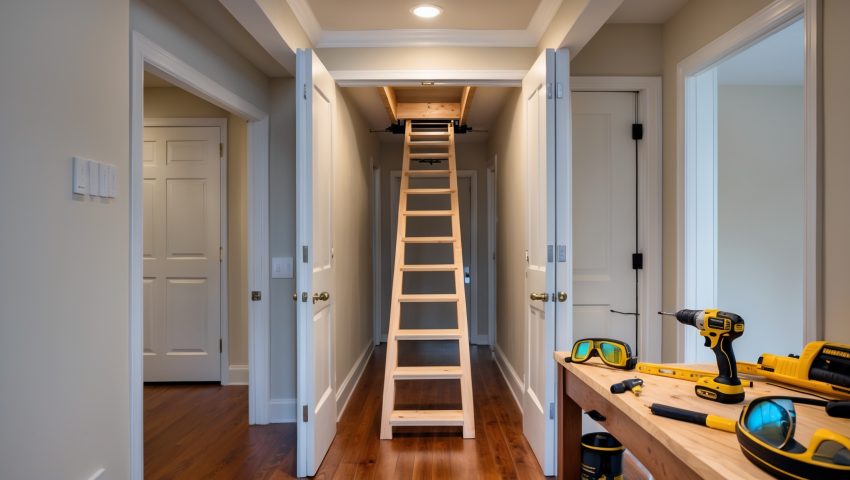
Introduction: Unlocking the Potential of Your Attic with Smart Access
For many U.S. homeowners, the attic remains an underutilized space—often because accessing it is inconvenient or unsafe. Whether you’re looking to store seasonal decorations, create a hobby nook, or simply perform routine maintenance, having reliable, easy access is essential. Enter the pull-down attic ladder: a cost-effective, DIY-friendly solution that transforms attic reachability and adds value to your home. But too often, homeowners underestimate the planning, tools, and safety considerations involved in installation. This guide demystifies the process, offering a practical, step-by-step overview tailored to U.S. homes. We’ll cover selecting the right ladder, assessing your ceiling framing, budgeting accurately, gathering essential tools, and ensuring you stay safe and code compliant. Get ready to confidently open up your attic space—on your terms, timeline, and budget.
Choosing the Right Attic Ladder: Types, Sizing, and Ratings
Understanding Ladder Types
Attic ladders come in several varieties, each with unique benefits and installation requirements:
- Folding (Scissor or Accordion): Compact, ideal for tight spaces, often all-metal.
- Folding (Sectional): Most common; wood or aluminum, fold in two or three sections.
- Telescoping: Extend vertically, great for very limited clearance, usually aluminum.
Load Ratings and Safety
Check the ladder’s duty rating. For most households, a 250–300 lb. rating is ideal, covering a person plus boxes or tools. Never exceed the manufacturer’s recommended weight limit.
Measuring for a Perfect Fit
- Ceiling Height: Measure from the attic floor to the finished floor below. Most ladders accommodate 7–10 feet; select accordingly.
- Rough Opening: Standard openings are 22.5” x 54”, but verify your joist spacing and planned cutout. Custom ladders are available for narrower or wider spaces.
- Landing Space: Ensure the ladder will fully deploy without hitting walls, doors, or fixtures.
Material Considerations
- Wood: Quieter, warmer look, heavier, may require more maintenance.
- Aluminum: Lightweight, rust-resistant, less susceptible to warping.
- Steel: Strongest, often used in telescoping and scissor ladders, can be noisy.
Budgeting and Cost Breakdown: What to Expect in 2024
Typical Price Ranges
- Attic Ladder Kit: $150–$500 depending on material and style.
- Miscellaneous Materials: $30–$100 (shims, insulation, trim, fasteners).
- Tool Rental (if needed): $20–$60 (reciprocating saw, nail gun, etc.).
- Permits: $0–$150 (location-dependent; see compliance section).
Professional installation can run $400–$1,200, so DIY represents significant savings if you’re prepared.
Regional Cost Factors
- Northeast: Older homes may require extra framing work or custom ladders; expect to budget 10–20% more.
- South & Southwest: Climate considerations may necessitate insulated ladders, costing $50–$200 extra.
- West Coast: Fire safety codes may require specialized fire-rated hatches; check local requirements.
Hidden Costs to Consider
- Drywall repair or painting after installation: $25–$100.
- Upgrading attic lighting or storage: variable.
- Disposal fees for old access hatches or debris: $0–$50.
Essential Tools and Equipment: What You’ll Need
Having the right tools ready before you start is crucial for safety and efficiency. Here’s a comprehensive checklist:
- Stud finder
- Measuring tape
- Carpenter’s square
- Pencil/marker
- Reciprocating saw or circular saw
- Drill/driver and bits
- Hammer and pry bar
- Level (4’ recommended)
- Step ladder
- Screwdrivers
- Safety glasses and gloves
- Dust mask
- Shims and wood blocking
- Insulation (batt or spray foam)
- Trim and finishing nails
Optional but Helpful
- Nail gun
- Portable work light
- Shop vacuum
- Helper (strongly recommended for lifting the ladder unit)
Step-by-Step Installation: From Prep to Finish
1. Site Preparation and Safety
- Clear the area below and above the intended opening.
- Lay down drop cloths to catch debris.
- Turn off power to nearby fixtures to avoid accidental contact with wiring.
- Wear safety glasses, gloves, and a dust mask.
2. Locating and Marking the Opening
- Use a stud finder to map out joists/rafters and avoid cutting into structural elements.
- Mark the outline of your rough opening using the ladder’s template or measurements.
- Verify there’s enough clearance in the attic for the ladder and its folding mechanism.
3. Cutting the Opening
- Drill pilot holes at each corner of your outline.
- Use a reciprocating or circular saw to carefully cut the ceiling along the marked lines.
- Remove the cut-out panel and inspect for wiring or plumbing.
- Frame the opening with doubled-up 2×6 or 2×8 lumber to reinforce the structure.
4. Installing the Ladder Unit
- With a helper, lift the ladder into the framed opening to test the fit.
- Shim around the frame so the ladder sits level and square. Use a 4’ level to check alignment in both directions.
- Secure the ladder frame to the opening with screws or lag bolts, following manufacturer’s guidelines.
- Deploy the ladder and test its operation — it should open/close smoothly without binding.
5. Trimming, Insulating, and Finishing
- Seal gaps around the frame with spray foam or batt insulation to prevent heat loss.
- Install finish trim to cover rough edges and match surrounding decor.
- Touch up or repaint as needed.
6. Final Safety Check
- Inspect all fasteners for tightness.
- Test ladder weight capacity and stability.
- Ensure locking mechanisms engage securely.
- Store the pull-down pole in a convenient location.
Code Compliance and Permit Requirements
Do You Need a Permit?
Regulations vary by municipality. Generally, cutting into ceiling joists or altering structural framing requires a permit. Contact your local building department before starting. In some states, a simple attic ladder replacement may be exempt, but creating a new opening almost always triggers permitting.
Common Code Considerations
- Minimum Opening Size: Some codes specify minimum clearances for attic access.
- Fire Separation: In attached garages or between floors, fire-rated hatches may be required.
- Insulation: IECC energy codes may mandate minimum insulation values for attic hatches in certain climates.
- Handrails: Rarely required for ladders, but check if your locale treats them as stairs.
Documentation
- Keep copies of permit approvals and inspection reports.
- Document installation with photos for insurance and resale purposes.
Safety Essentials: Protecting Yourself and Your Home
Before Installation
- Review the ladder’s manual and all included safety warnings.
- Inspect your workspace for electrical wiring, ductwork, or plumbing above the ceiling — reroute as needed before cutting.
During Installation
- Never work alone when lifting or positioning the ladder unit.
- Use a stable stepladder and avoid standing on ceiling joists not designed for weight.
- Wear eye, hand, and respiratory protection when cutting drywall or insulation.
- Immediately sweep or vacuum up dust and debris to prevent slips.
After Installation
- Test the ladder multiple times at full extension with increasing loads.
- Ensure the locking arms engage before climbing each time.
- Keep children and pets away from the ladder when in use.
- Store access pole out of reach of unsupervised children.
Maintenance Best Practices for Longevity
Routine Inspection Checklist
- Quarterly: Check all fasteners for tightness and look for signs of wood splitting or metal fatigue.
- Annually: Lubricate hinges and pivot points with silicone spray.
- Seasonally: Inspect for insulation gaps or drafts around the hatch; reseal as needed.
Cleaning and Care
- Vacuum dust and cobwebs from ladder treads and hinges.
- Wipe wood or metal surfaces with a damp cloth to prevent grime buildup.
- Check for moisture intrusion or evidence of pests in the attic near the opening.
When to Repair or Replace
- Replace worn or damaged treads immediately.
- If the ladder becomes difficult to operate or feels unstable, consult the manufacturer or a pro for assessment.
- Replace weatherstripping or insulation if drafts reappear.
Real-World Case Study: DIY Success in a 1950s Midwest Home
Background
A homeowner in Ohio wanted safer, year-round access to his attic for storage and HVAC maintenance. His home’s original hatch was too small and located in a cramped closet.
Challenges
- Ceiling joists spaced 24” apart, requiring custom framing.
- Electrical wiring for hallway lights ran across the intended opening.
- Building code required R-38 insulation and an air-sealing gasket.
DIY Solutions
- Mapped joists and wiring; rerouted wiring with junction boxes per code.
- Installed a 25” x 54” aluminum ladder rated for 350 lbs, with a built-in insulated hatch.
- Used rigid foam insulation and weatherstripping to seal the opening.
- Project took two weekends and cost $430, including permit fee.
Result
The homeowner now enjoys safe, convenient attic access, improved energy efficiency, and added resale appeal.
Conclusion: Empowering Your Next DIY Attic Ladder Project
Installing a pull-down attic ladder is a project that rewards planning, precision, and safety awareness. By demystifying the process—selecting the right ladder, budgeting accurately, assembling the proper tools, and navigating code compliance—you can transform attic access from a hassle into a highlight of your home. Remember, the key to a successful installation lies in the details: double-check measurements, reinforce framing, insulate the hatch, and never skip safety steps. While the upfront effort may seem daunting, the payoff is year-round accessibility and peace of mind. Regular maintenance will keep your ladder functioning smoothly for years to come. If you encounter unique challenges—unusual framing, wiring obstacles, or regional code quirks—don’t hesitate to consult local building officials or bring in a professional for advice. Your attic holds untapped potential, and with this guide, you’re ready to unlock it safely, efficiently, and affordably. Happy DIY-ing!
You mentioned different ladder types—are there specific benefits to choosing aluminum over wood for long-term durability and insulation?
Aluminum ladders are more durable and resistant to warping, pests, and moisture compared to wood. However, wood ladders provide better insulation, which can help with energy efficiency in extreme climates. Your choice depends on whether durability or insulation is more important for your needs.
You mention checking joist spacing before cutting the opening. What should I do if my joists don’t match the standard 22.5 x 54 inch size?
If your joists don’t match the standard size, you can adjust the opening by trimming or reinforcing joists to fit the ladder frame. It may require cutting a joist and adding headers for support. Consider consulting a professional if unsure.
Do you have any advice on how to determine if my attic joists are suitable for a standard 22.5 x 54 inch opening, or will I need to reinforce them?
Begin by measuring the space between your joists to see if they accommodate a 22.5 x 54 inch opening. Check if any joists will be cut; if so, reinforcement with headers and trimmers is usually needed for structural support.
You mention budgeting for installation—could you break down typical costs for both DIY and hiring a professional, including any unexpected expenses homeowners might overlook?
DIY attic ladder installation usually costs $150 to $300 for materials. Hiring a professional typically ranges from $400 to $1,200, depending on complexity. Homeowners sometimes overlook costs like permits, ceiling repairs, insulation replacement, or disposal of old materials.
How can I tell if my attic joists can support a heavier-duty ladder, especially if I’m planning to store a lot of boxes up there?
To check if your attic joists can support a heavier ladder and storage, inspect their size and spacing—standard joists are often 2×6 or larger and spaced 16 to 24 inches apart. For safety, consider having a structural engineer assess their load capacity before installation.
I’m curious how the different attic ladder types, like sectional versus telescoping, compare for long-term durability if I’ll be using it frequently for storage.
Sectional attic ladders, such as folding or sliding types, are generally more durable for frequent use because they have sturdy joints and thicker materials. Telescoping ladders are lighter and more compact, but may wear out faster with heavy, regular use.
You mention duty ratings of 250–300 lbs, but are there major differences in safety or durability between aluminum and wood sectional ladders at the same rating?
Aluminum and wood ladders with the same duty rating both meet required safety standards, but aluminum is usually lighter, resists moisture and warping, and often lasts longer, while wood may feel sturdier underfoot but can be affected by humidity.
If my ceiling joist spacing doesn’t match the standard attic ladder opening, how difficult is it for a DIYer to modify the framing safely?
Modifying ceiling joists for an attic ladder can be challenging for a DIYer. It usually involves cutting and reinforcing joists, which requires careful planning to maintain structural integrity. If you’re unsure, consulting a professional or building inspector is recommended.
Is there a big difference in insulation or energy efficiency between a wooden sectional ladder and an all-metal folding design?
Yes, there can be a difference. Wooden sectional ladders often provide better insulation than all-metal folding designs because wood doesn’t conduct heat as much as metal. However, energy efficiency also depends on the quality of the ladder’s weatherstripping and door seal.
You mention planning for both budget and code compliance—are there any hidden costs that homeowners commonly overlook during attic ladder installation?
Homeowners often overlook costs like disposal of old materials, patching or painting ceiling areas, upgrading insulation around the ladder, and possible electrical work if wiring needs to be moved. It’s wise to budget for these potential extras.
If my ceiling height is just over 10 feet, do I need a custom attic ladder or are there adjustable models that would work?
Most attic ladders are adjustable and can fit ceiling heights up to about 10 or 12 feet, depending on the model. Just check the product specifications to ensure the ladder you choose covers your height—custom models usually aren’t necessary.
What unexpected costs should I plan for during attic ladder installation besides the ladder and basic tools you mentioned?
You should budget for possible extra costs like repairing ceiling finishes, electrical wiring relocation, adding insulation, or hiring professional help if the attic framing needs modification. Disposal fees for old materials and permits may also apply in some areas.
Does the installation process differ much between telescoping and sectional attic ladders, especially regarding tools or safety steps?
Yes, installing telescoping attic ladders is usually simpler and needs fewer tools compared to sectional ladders. Sectional ladders are heavier and may require extra hands for lifting and more attention to securing joints for safety.
You mention different ladder types like sectional and telescoping—are there significant differences in long-term durability or maintenance between aluminum and wood models?
Aluminum attic ladders generally last longer and require less maintenance than wood models, as they’re resistant to warping, rot, and pests. Wood ladders can be sturdy but may need periodic checks for cracks, moisture damage, or loose joints.
You mentioned checking ceiling joist spacing before picking a ladder opening size—are there common issues if my joists aren’t spaced for the standard 22.5 by 54 inch opening?
If your joists aren’t spaced for the standard 22.5 by 54 inch opening, you might need to cut and frame out a new opening, which can involve extra labor and materials. Always make sure any modifications keep your ceiling structurally sound.