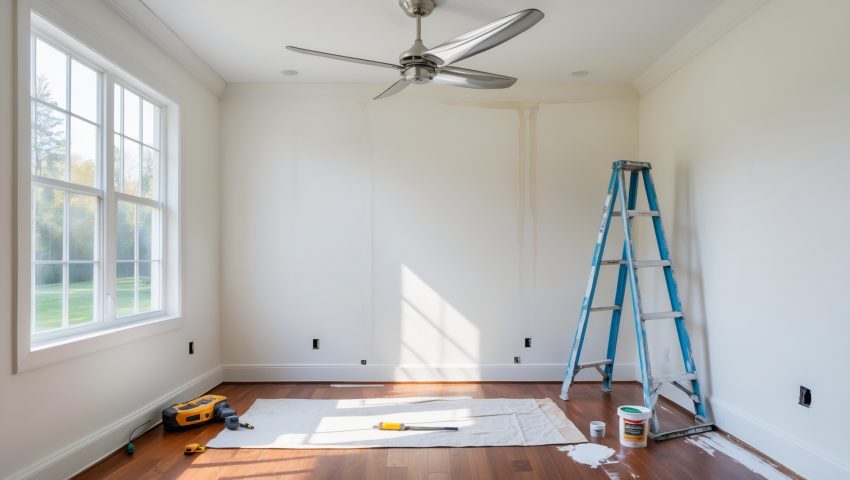
Introduction: Why DIY Ceiling Fan Installation Deserves Special Attention
Ceiling fans are one of the most popular upgrades for U.S. homes, offering an affordable way to enhance comfort and energy efficiency in every room. Installing a ceiling fan seems like a straightforward weekend project—until you’re halfway up the ladder, balancing a heavy motor, and realize the wiring colors don’t match the instructions. Each year, thousands of homeowners attempt DIY ceiling fan installation, but a surprising number of these projects end up with wobbly fans, electrical hazards, or even costly ceiling repairs.
This comprehensive guide will walk you through the key mistakes to avoid when installing a ceiling fan yourself, with practical advice on tools, budgeting, and safety tailored for U.S. homes. Whether you’re replacing an old fixture or adding a fan where none existed, understanding the nuances of ceiling fan installation can save you hours of frustration, prevent accidents, and ensure your new fan runs smoothly and safely for years to come.
From selecting the right mounting system to decoding electrical boxes and navigating code compliance, we’ll cover every aspect of the process. If you’re ready to tackle your ceiling fan project like a pro—and avoid the pitfalls that trip up so many DIYers—read on for detailed, step-by-step guidance.
Understanding the Basics: What Makes Ceiling Fan Installation Tricky?
Weight and Movement: Why Fans Are Not Like Light Fixtures
Unlike standard light fixtures, ceiling fans are heavy and generate constant motion. A typical fan weighs between 15 and 50 pounds and can exert significant torque on mounting hardware. That’s why fans require a special electrical box rated for ceiling fan support—often overlooked by beginners, resulting in loose, noisy, or dangerous installations.
Electrical Complexity and Local Codes
Ceiling fans often require more complex wiring than lights, especially if you want separate wall switches for the fan and the light kit. U.S. building codes differ by state and municipality, with requirements for box support, wire gauge, and even fan blade clearance. Neglecting code compliance can lead to insurance headaches or unsafe conditions.
Budgeting for Your Ceiling Fan Project
Breaking Down Typical Costs
- Ceiling Fan Unit: $60–$400, depending on size, features, and style.
- Electrical Box Upgrade: $10–$25 for a fan-rated box.
- Mounting Hardware: Usually included, but replacement brackets may add $10–$20.
- Tools You May Need to Buy: $25–$75 (see tools section below).
- Wiring & Wire Nuts: $5–$15.
- Patching Materials (if needed): $10–$30.
Most DIYers spend between $120 and $550 per ceiling fan installation, with costs rising if you need to run new wiring or repair drywall. Always add a 10–20% buffer for unexpected expenses, especially if working in older homes where electrical systems may not be up to code.
Essential Tools and Materials: What You Really Need
- Voltage Tester or Non-Contact Voltage Detector
- Drill with Assorted Bits
- Screwdrivers (Philips and Flathead)
- Wire Strippers and Cutters
- Pliers
- Adjustable Wrench
- Stepladder or Extension Ladder (rated for your weight and ceiling height)
- Fan-Rated Electrical Box (if not already installed)
- Wire Nuts & Electrical Tape
- Circuit Tester
Optional but helpful: Stud finder, drywall saw, headlamp, and a helper for lifting the fan motor.
Beginner Mistakes to Avoid
1. Not Shutting Off the Correct Circuit
It may sound basic, but one of the most common—and dangerous—mistakes is failing to turn off the correct breaker before starting. Always test every wire with a voltage tester after flipping the breaker. In older homes, mislabeled panels or shared circuits can cause surprises.
2. Using a Regular Electrical Box
Standard electrical boxes are not designed to support the weight and motion of a ceiling fan. Always inspect the box: if it’s plastic or not explicitly labeled for ceiling fans (often marked “FAN SUPPORT”), replace it. Mount the new box directly to a ceiling joist or use a fan brace rated for your fan’s weight.
3. Incorrect Mounting and Blade Clearance
Fans should be mounted so that blades are at least 7 feet above the floor and 18 inches from walls or sloped ceilings. Inadequate clearance can reduce airflow and increase noise. Use the supplied template or measure carefully before drilling.
4. Miswiring Switches or Fan Features
Wiring a fan requires matching colors correctly—typically black for fan, blue for light, and white for neutral, but manufacturers sometimes vary. If your fan will be controlled by two wall switches (one for the light, one for the fan), you’ll need a 3-wire setup from the wall box. Mixing these up can lead to nonfunctional switches or tripped breakers.
5. Skipping the Balancing Step
Fans must be balanced to avoid wobble and noise. Always use the included balancing kit, which typically involves adhesive weights to fine-tune the blade alignment. Even a slight imbalance can cause premature wear or loosen mounting hardware.
6. Over-Tightening or Under-Tightening Screws
Mounting screws should be snug but not overtightened. Stripping screws or cracking mounting brackets is a common DIY misstep that may not be immediately obvious—until the fan starts to sag or rattle.
Step-by-Step: Proper Ceiling Fan Installation
1. Pre-Installation Checks
- Turn off power at the breaker and verify with a tester.
- Remove the old fixture and inspect the electrical box.
- Measure blade clearance to walls and ceiling.
2. Install or Upgrade the Electrical Box
- If the box isn’t fan-rated, remove it.
- Install a fan-rated box directly to a joist or using an expandable brace.
- Ensure the box is flush with the ceiling and firmly secured.
3. Assemble the Fan Components
- Follow the manufacturer’s instructions for assembling the downrod, motor, and mounting bracket.
- Pre-assemble as much as possible on the ground for safety.
4. Secure the Mounting Bracket
- Attach the bracket to the fan-rated box using supplied screws.
- Double-check tightness and alignment.
5. Wiring the Fan
- Connect house wires to fan wires according to the diagram.
- Use wire nuts and electrical tape for all connections.
- Gently tuck wires into the box without forcing or pinching.
6. Attach the Fan Motor and Downrod
- Lift the assembled fan motor into place (a helper is useful here).
- Secure the downrod or flush mount to the bracket.
- Double-check all mounting screws.
7. Attach Fan Blades and Light Kit
- Install blades one at a time, tightening each screw evenly.
- Attach the light kit and connect wiring as per instructions.
8. Final Checks and Balancing
- Restore power and test all functions.
- Use the balancing kit to eliminate wobble.
- Listen for unusual noises or vibrations.
Safety Essentials: Protecting Yourself and Your Home
Electrical Safety
- Always test for live wires before touching any electrical component.
- Never work on a wet ceiling or with damp hands.
- If you encounter aluminum wiring (common in homes built in the 1960s–70s), consult an electrician for proper connectors.
Ladder and Lifting Safety
- Use a sturdy ladder placed on level ground.
- Never stand on the top step or try to install a fan while overstretching.
- Fans are heavy; ask a helper to support the motor during mounting.
Fire and Shock Prevention
- Use only UL-listed (or equivalent) electrical boxes and connectors.
- Do not overload the circuit—if other fixtures or outlets trip when the fan is running, have the circuit evaluated by a professional.
Compliance and Permit Considerations
Most U.S. jurisdictions do not require a permit for replacing a light fixture with a ceiling fan if no new wiring or circuits are added. However, if you’re running new wire, installing a new switch, or modifying ceiling structure, check with your local building department. Some states or cities (notably in California, New York, and New Jersey) have stricter codes regarding electrical work and may require inspection.
Document your installation for insurance purposes—take before-and-after photos and keep receipts for electrical boxes and fans. This can help resolve issues if a future claim arises or you sell your home.
Choosing the Right Fan for Your Space
Size Matters
- Small rooms (up to 75 sq ft): 29–36 inch blade span
- Medium rooms (76–144 sq ft): 36–42 inch blade span
- Large rooms (144–225 sq ft): 44–50 inch blade span
- Great rooms (over 225 sq ft): 52 inches or larger
Also consider ceiling height; for ceilings over 9 feet, use a downrod for optimal airflow.
Features to Consider
- Remote Controls: Useful for bedrooms and high ceilings, but may require extra wiring steps.
- Reversible Blades: Allow for seasonal airflow changes.
- Light Kits: Integrated or add-on; make sure your room needs the extra lighting.
- Damp/Wet Ratings: For bathrooms, kitchens, or outdoor areas, choose a fan rated accordingly.
Maintenance Tips for Long-Term Performance
- Dust blades and light kits every three months.
- Tighten blade screws and mounting hardware annually.
- Replace bulbs with the correct wattage to avoid overheating.
- Check for wobble or noise and rebalance as needed.
- Inspect wiring connections if the fan fails or behaves erratically.
Conclusion: Confidently Upgrade Your Home With a Safe, Quiet Ceiling Fan
DIY ceiling fan installation is a project that many U.S. homeowners can tackle successfully—but only with careful preparation, the right tools, and a clear understanding of the common pitfalls. From using a proper fan-rated electrical box to decoding wiring diagrams and balancing blades, each step matters for your safety and the lifespan of your new fan.
By budgeting realistically, assembling the correct tools, and double-checking your work at every phase, you’ll avoid the frustrations and hazards that plague so many first-time installers. Remember, if you encounter old or confusing wiring, or if local codes require, there’s no shame in calling a licensed electrician for an assessment. Your comfort, safety, and peace of mind are always worth it.
Installing a ceiling fan not only cools your room and cuts energy bills—it’s a visible upgrade that adds value and appeal to your home. With the guidance provided here, you can move beyond beginner mistakes and complete your project with confidence, knowing your new fan is both secure and code-compliant. Enjoy the breeze—and the satisfaction of a job done right!
Could you explain how to tell if my existing electrical box is rated for ceiling fans, or do I always need to replace it when upgrading from a light fixture?
Check if your existing electrical box is labeled as ‘ceiling fan rated’ or ‘fan support’—it’s usually stamped on the box. If it’s only rated for lights, it’s best to replace it with a fan-rated box for safety.
If I run into mismatched wiring colors that don’t match the instructions, what’s the safest way to figure out which wire goes where?
If the wire colors don’t match your instructions, turn off the power first. Then, use a voltage tester to identify live wires and consult your home’s wiring diagram if possible. When in doubt, it’s safest to consult a licensed electrician.
If my home was built in the 1960s, how can I tell if the existing electrical box is rated to support a ceiling fan or just a light fixture?
Check if the electrical box is metal and securely attached to a ceiling joist, or if it’s labeled as fan-rated. Light fixture boxes are often plastic or thin metal and not rated for fan support. When in doubt, replace it with a fan-rated box.
If I want to add a ceiling fan where there wasn’t a fixture before, how should I estimate the total cost including tools and any required upgrades to meet local codes?
Estimate the cost by adding the price of the fan, electrical box rated for ceiling fans, wiring, wall switch, tools like a drill and voltage tester, and possible permit fees. Consult local code requirements, which may require hiring a licensed electrician.
If my old ceiling light fixture doesn’t have a fan-rated electrical box, is it something I can upgrade myself, or do I need to hire an electrician?
You can upgrade to a fan-rated electrical box yourself if you’re comfortable working with home wiring and follow safety guidelines. However, if you’re unsure or unfamiliar with electrical work, it’s safer to hire a licensed electrician.
Is there a way to tell before starting the project if my ceiling can handle the weight and torque of a new fan, or do I need to open it up first?
You can check if your ceiling box is fan-rated by looking for labels or markings on it, often accessible from the attic or by removing the existing fixture. If uncertain, it’s safest to open it up and inspect directly before installation.
Can you explain how to tell if my current electrical box is strong enough to hold a ceiling fan, or do I always need to replace it?
Not all electrical boxes are rated for ceiling fans. Check for a label inside the box saying ‘fan-rated’ or ‘supports ceiling fans.’ If it feels flimsy or only supports light fixtures, you’ll need to replace it with a fan-rated box.
If I want my fan and light to be controlled by separate wall switches, does that usually require running new wires, or can it sometimes be done with existing wiring?
To control the fan and light separately, you usually need two switch wires running from the wall to the ceiling box. If your existing wiring only has one, you’ll likely need to run a new wire. Some remote control kits can offer separate control without rewiring.
Can you share any ballpark estimates for the total cost of a basic DIY fan installation, including typical tools and hardware needed for U.S. homes?
For a basic DIY ceiling fan install in the U.S., expect to spend about $60–$200 for the fan itself, plus $30–$80 for basic tools and hardware if you don’t already have them. Total costs usually range from $90 to $280.
If my ceiling only has a standard light fixture electrical box, what is the safest way to upgrade it to support a heavier ceiling fan?
To safely support a ceiling fan, replace the standard light fixture box with a fan-rated electrical box that attaches securely to a ceiling joist or a fan brace. Always turn off the power before starting work, and follow all manufacturer instructions.
Can you clarify what to look for when choosing the right type of electrical box for supporting a ceiling fan?
When choosing an electrical box for a ceiling fan, make sure it’s labeled as ‘fan-rated’ or ‘suitable for ceiling fan support.’ It should be metal or heavy-duty plastic and securely mounted to a ceiling joist to handle the fan’s weight and movement.
The article mentions budgeting for DIY fan projects—are there any hidden costs besides tools and the fan itself that first-timers might overlook?
Yes, you might also need extra wiring, electrical boxes, mounting brackets, or a voltage tester if your setup is older. Don’t forget to budget for patching materials or paint if you need to repair ceiling holes or touch up after installation.
If I’m replacing an old light fixture with a ceiling fan, how can I tell if my existing electrical box is rated to support the fan’s weight and movement?
Look for a label inside the electrical box stating it is ceiling fan rated or marked for fan support. Fan-rated boxes are usually metal or heavy-duty plastic and attached firmly to a ceiling joist or support brace.
Can I safely use a universal remote kit if my house wiring doesn’t match the fan instructions, or does that complicate code compliance issues?
If your house wiring doesn’t match the fan instructions, adding a universal remote kit may further complicate code compliance and safety. It’s best to consult an electrician to ensure everything meets local codes and is installed safely.
If the wiring colors in my ceiling don’t match the fan instructions, what’s the safest way to identify which wire goes where?
If the wire colors don’t match, turn off the power and use a voltage tester to identify live wires. Consult your home’s wiring diagram or contact a licensed electrician to ensure connections are safe and correct.
If I want to have separate wall switches for the fan and the light, is that something a beginner DIYer could handle, or should I hire an electrician?
Wiring separate wall switches for the fan and light can be complex, especially if new wiring is needed. If you’re not comfortable with electrical work, it’s safer to hire an electrician to ensure it’s done correctly and up to code.
When upgrading from an old light fixture, how can I tell if my current electrical box is actually rated to support a ceiling fan’s weight and movement?
Check for a label or stamp inside the electrical box stating it’s rated for ceiling fans—often marked as ‘fan-rated’ or ‘support ceiling fan.’ Fan-rated boxes are usually made of metal or reinforced plastic and securely anchored to a ceiling joist.
You mention budget in the article—can you give a rough estimate for what the tools and materials might cost for a typical DIY ceiling fan install in the US?
For a typical DIY ceiling fan installation in the US, basic tools and materials usually cost between $50 and $150, not including the fan itself. This includes items like a ladder, screwdrivers, voltage tester, wire connectors, and mounting hardware.
If I want to add a separate wall switch for the light and fan, is that something a beginner can handle, or should I call an electrician?
Adding a separate wall switch involves electrical wiring and may require running new wires or modifying existing circuits. If you’re not experienced with electrical work, it’s safer to hire a licensed electrician for this task.
What’s the safest way to handle mismatched wire colors when the instructions don’t seem to match what I find in my ceiling?
If wire colors don’t match your instructions, always turn off the power first. Use a voltage tester to confirm wires are dead, and consult your local wiring code or a licensed electrician—never guess wire functions, as mistakes could be dangerous.
How much should I budget for the special mounting hardware and safety tools the article mentions, beyond the cost of the fan itself?
For special mounting hardware and safety tools, you should budget an additional $30 to $80. This covers items like a fan-rated ceiling box, mounting bracket, voltage tester, and safety gear such as gloves or goggles.
If I’m installing a fan where there wasn’t one before, about how much extra should I budget for code compliance and any electrical upgrades?
If you’re adding a ceiling fan where none existed, budget an extra $150–$500 for code compliance and possible electrical upgrades, depending on wiring, box replacement, and whether a new circuit or permit is needed. Costs vary based on your home’s current setup.
For someone replacing a light fixture with a ceiling fan in an older house, are there any specific code compliance issues we should watch out for during the project?
Yes, you should ensure the existing electrical box is rated for ceiling fan support, not just light fixtures. Also, check that wiring meets current code standards and that your installation follows local building codes for safety.