Introduction: Why Your Tool Shed Deserves an Upgrade
The humble tool shed is often the unsung hero of American home improvement. Whether you’re a weekend DIYer or a seasoned renovator, your shed is more than just a place to toss rakes and hammers. It’s the nerve center for every project, from quick home repairs to full-scale backyard transformations. But many homeowners overlook the importance of an organized, well-maintained tool shed. The result: wasted time hunting for tools, damaged equipment, and even safety hazards lurking behind cluttered corners.
This in-depth guide will help you rethink your tool shed from the ground up. We’ll cover smart storage strategies, essential tools every U.S. DIYer should own, and practical tips for keeping your shed—and everything in it—in peak condition year-round. You’ll learn how to maximize even the smallest storage spaces, protect your gear from weather and wear, and maintain a safe, efficient workspace that fuels your creativity and productivity. Ready to transform your shed into a true DIY headquarters? Let’s get started.
Assessing Your Shed: Space, Structure, and Security
Evaluating Shed Size and Layout
Before reorganizing or upgrading your tool shed, take stock of its available space and structure. Measure the interior dimensions and note any limitations, such as low ceilings or awkward corners. Make a list of what you need to store, from power tools and hand tools to seasonal equipment like snow shovels or lawnmowers. Map out how often you use each item—frequently used tools need easy access, while rarely used supplies can be stored higher or further back.
Structural Integrity: Check Before You Store
Inspect your shed for leaks, rot, or pest damage before investing in new storage systems. Look for:
- Roof leaks: Water stains or soft spots may indicate leaks, which can lead to mold and tool rust.
- Floor stability: Wooden floors should be firm with no signs of sagging or holes.
- Wall damage: Check for cracks, rot, or evidence of termites or rodents.
- Door and window seals: Tight seals keep weather and pests out.
Address structural issues promptly to protect your investment in tools and storage solutions.
Security Basics
A tool shed can be a tempting target for thieves. Upgrade security with:
- Heavy-duty padlocks or deadbolts on all doors
- Motion-sensor lighting nearby
- Security cameras or alarms if your shed stores high-value equipment
- Opaque window coverings to keep contents out of sight
Smart Storage Solutions: Organize for Efficiency
Pegboards: The DIYer’s Best Friend
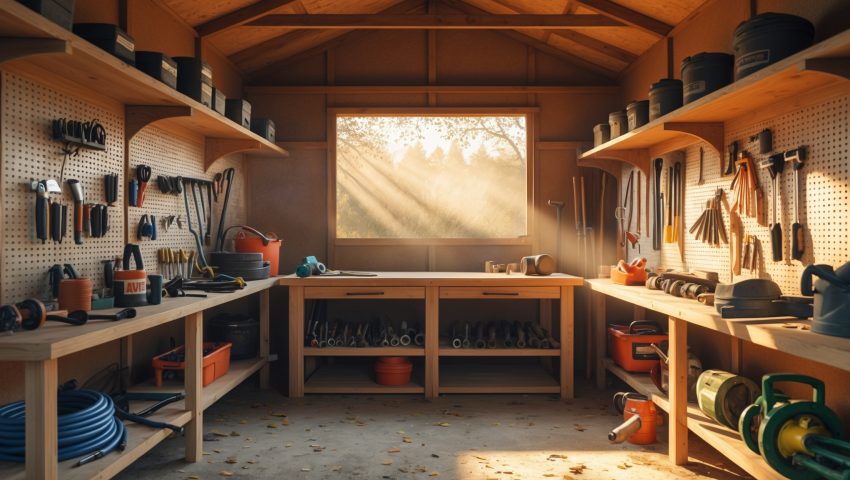
Pegboards are a time-tested solution for tool organization. Mount a pegboard on one or more walls to keep hand tools, wrenches, and screwdrivers visible and within arm’s reach. Use hooks, baskets, and specialty holders for everything from pliers to power drills. Lay out your pegboard based on frequency of use—everyday tools at eye level, specialty items higher or lower.
Shelving Systems: Maximize Vertical Space
Sturdy shelving is vital for storing power tools, paint cans, and bins of small hardware. Adjustable metal or heavy-duty plastic shelves adapt to changing storage needs. Install shelves from floor to ceiling, but keep heavier items lower for safety. Label each section for quick identification.
Tool Chests and Cabinets
A lockable tool chest keeps valuable or dangerous items secure and dust-free. Look for models with ball-bearing drawers, non-slip liners, and integrated organizers for sockets and fasteners. For larger sheds, freestanding cabinets can store paint, chemicals, or rarely used tools safely out of reach of children and pets.
Bins, Baskets, and Buckets
Group similar items—garden gloves, fasteners, extension cords—into bins or baskets. Use stackable plastic bins for weather resistance, and clear containers for easy visibility. Hang sturdy buckets from wall hooks for hoses, rope, or bulky hand tools.
Ceiling and Overhead Storage
Don’t overlook the ceiling! Install ceiling-mounted racks for ladders, long-handled tools, or seasonal gear (like snow shovels or pool nets). Overhead storage frees up floor space and keeps tripping hazards out of the way. Use heavy-duty hardware and double-check weight limits before storing anything overhead.
Magnetic Strips and Small Parts Storage
Magnetic strips mounted on walls or inside cabinet doors are perfect for storing screwdrivers, pliers, or drill bits. For screws, nails, and other small hardware, repurpose clear food jars or invest in a dedicated organizer with labeled drawers.
Essential Tools for Every U.S. Shed
Must-Have Hand Tools
- Claw hammer
- Adjustable wrench
- Phillips and flathead screwdrivers
- Tape measure
- Utility knife
- Pliers (needle-nose, slip-joint)
- Level
- Handsaw
Power Tools for DIY Projects
- Cordless drill/driver
- Circular saw
- Orbital sander
- Jigsaw
- Shop vacuum
Store power tools in their cases or on dedicated shelves. Coil cords neatly and avoid stacking heavy items on top of delicate electronics.
Yard and Garden Tools
- Lawnmower (push or riding, depending on yard size)
- String trimmer
- Shovel and spade
- Rake
- Pruning shears
- Garden hose (stored on a wall-mounted reel)
Clean and dry garden tools before storage to prevent rust and prolong their lifespan.
Maintenance Best Practices: Sheds and Tools
Annual Shed Maintenance Checklist
- Roof inspection: Check for leaks, missing shingles, or damaged flashing every spring and fall.
- Exterior cleaning: Power wash or scrub siding to remove dirt, algae, and mildew.
- Ventilation: Ensure vents are clear to prevent moisture buildup and mold.
- Pest prevention: Seal cracks, keep doors closed, and inspect for nests or droppings regularly.
- Foundation check: Look for signs of shifting, rot, or water pooling around the base.
Tool Maintenance Tips
- Cleaning: Wipe down tools after use; remove soil, sawdust, or grease.
- Sharpening: Keep blades, pruners, and chisels sharp for safer, more effective use.
- Rust prevention: Apply a light coat of machine oil to exposed metal; use silica gel packs in drawers.
- Battery care: Store rechargeable batteries at moderate temperatures; avoid leaving them plugged in constantly.
- Repair and replace: Inspect cords for fraying, handles for cracks, and moving parts for wear. Repair or replace as needed.
Weatherproofing Your Shed
Protect your tools and supplies from the elements with these weatherproofing strategies:
- Install weatherstripping on doors and windows
- Add insulation if you live in an area with extreme temperatures
- Use a dehumidifier or moisture absorber in humid climates
- Elevate storage off the ground to prevent water damage in case of flooding
Seasonal Organization: Adapting Throughout the Year
Spring and Summer
Move lawn and garden equipment to the front for easy access. Store snow shovels, salt, and winter gear towards the back or overhead. Clean and oil pruners, trimmers, and mower blades before first use of the season.
Fall and Winter
Reverse your storage priorities: bring out snow removal tools and cold-weather supplies. Drain and store hoses indoors if possible. Check for leaks and seal gaps before winter storms hit. Inspect and service power equipment before storing for the season.
Safety Checklist: Protecting People and Property
- Install adequate lighting for working safely, even after dark
- Keep flammable materials (gasoline, paints) in approved safety containers, away from heat sources
- Mount a fire extinguisher near the entrance
- Store sharp tools with blades covered or pointed down
- Keep aisles clear to prevent trips and falls
- Childproof chemicals and heavy tools if children have access to the shed
Real-Life Shed Makeover: A U.S. Success Story
When the Johnson family in Ohio realized their weekend projects were being slowed by a chaotic, overcrowded shed, they decided to overhaul their storage strategy. By installing new pegboards, adding floor-to-ceiling shelving, and investing in a lockable tool chest, they reclaimed valuable floor space. Seasonal items were moved overhead, and clear bins made it easy to find hardware at a glance. With regular maintenance and a strict “clean as you go” policy, the Johnsons now spend less time searching for tools and more time enjoying their DIY successes. Their tool shed has become a true asset—organized, secure, and ready for every project.
Conclusion: Invest in Your Shed, Invest in Your Success
Transforming your tool shed isn’t just about aesthetics—it’s about efficiency, safety, and protecting your investment in tools and equipment. A thoughtfully organized shed saves you time on every project, prevents costly damage to your gear, and creates a safer environment for DIYers of all skill levels. By adopting smart storage solutions, performing regular maintenance, and adapting your setup for each season, you’ll keep your workspace functional and inviting all year long.
Remember, the best tool shed is one that evolves with your needs. Start by decluttering and addressing structural issues, then implement proven storage strategies like pegboards, shelving, and overhead racks. Prioritize tool maintenance and shed upkeep to ensure everything stays in top shape. With a little effort and planning, your tool shed will become the heart of your home improvement operations—a space that inspires your next big idea and keeps every project running smoothly.
Don’t let a neglected shed slow you down. Invest in your workspace, and watch your DIY ambitions flourish.
If I discover minor rot or pest damage during my shed assessment, should I address these myself or consult a professional before upgrading my storage systems?
If the rot or pest damage is minor, you can usually handle repairs yourself with basic tools and materials. For extensive damage or if you’re unsure, it’s best to consult a professional before making any storage upgrades.
When you mention storing less-used items higher up or further back, what kind of shelving or storage options work best in a smaller shed?
For smaller sheds, try adjustable wall-mounted shelves or overhead racks to maximize vertical space. Stackable bins or clear containers on higher shelves also help keep less-used items organized and accessible without cluttering the main area.
What are some effective ways to address roof leaks or soft spots in an older shed before installing new storage solutions?
Before adding new storage, patch any roof leaks with roofing sealant or replace damaged shingles. For soft spots, reinforce with new plywood panels and seal all exposed wood. This ensures storage installations stay dry and your shed remains structurally sound.
If I find signs of rot in the shed floor but the rest of the structure seems solid, should I repair just the floor or is a full replacement necessary?
If the rot is limited to the shed floor and the rest of the shed is solid, you can usually repair or replace just the affected floorboards. Be sure to identify and fix the cause of moisture to prevent future issues.
Do you have any suggestions for protecting tools from humidity in areas where the shed isn’t fully climate controlled?
To protect your tools from humidity, use silica gel packs or dehumidifiers, and keep tools in airtight containers or cabinets. Regularly oil metal parts to prevent rust, and consider moisture-absorbing mats on shed floors.
When checking a shed for leaks or rot, are there any specific warning signs that are easy to overlook, especially in older wooden sheds?
Look for subtle signs like musty odors, slight discoloration on wood, spongy or soft spots when pressed, small patches of mold, and rusty nails or hinges. These can indicate moisture problems or early rot, even if no obvious leaks are visible.
If my shed floor has some minor sagging but no holes yet, is it safe to just reinforce it or should I replace the boards entirely?
If the boards are just sagging but still solid and free from rot or damage, reinforcing with extra supports underneath can work. However, if you notice any softness, rot, or cracks, replacing those boards is a safer long-term fix.
Could you recommend weather-resistant storage solutions for sheds in areas with extreme temperature swings, especially if you’re on a tighter budget?
Look for heavy-duty plastic or resin storage bins, which resist moisture and temperature changes and are affordable. Metal shelving and sealed tote bins also work well. Avoid cardboard or untreated wood, as they can warp or deteriorate in extreme conditions.
Do you have any tips for keeping tools in good shape during humid summers? I worry about rust even with a leak-free shed.
To prevent rust in humid summers, keep tools dry by using silica gel packs or a dehumidifier in your shed. Wipe tools after use and apply a light coat of oil to metal surfaces for extra protection.
Do you have tips for protecting tools from humidity if my shed tends to get a bit damp, especially over the summer?
To protect your tools from humidity, use moisture absorbers like silica gel or dehumidifier packs in your shed. Store tools off the ground on shelves or hooks, and consider applying a light coat of oil to metal surfaces to prevent rust.
What are the best storage solutions for oddly shaped hand tools like hedge trimmers or large saws, especially in smaller sheds?
For oddly shaped tools like hedge trimmers or large saws, use wall-mounted hooks, pegboards with adjustable hangers, or heavy-duty magnetic strips. In smaller sheds, vertical storage and ceiling racks help maximize space and keep tools accessible.
Can you recommend budget-friendly storage solutions for small sheds with low ceilings or awkward corners?
For small sheds with low ceilings or tricky corners, try stackable plastic bins, wall-mounted pegboards, and corner shelves. Hanging organizers and magnetic strips for tools also make use of vertical and awkward spaces without breaking the bank.
If my shed has a wooden floor that feels a little soft in one spot, should I fix that before setting up new storage shelves? What’s the best way to reinforce it?
Yes, it’s best to fix the soft spot before adding new shelves, as weak flooring may not support extra weight. Reinforce it by replacing damaged boards and adding sturdy joists underneath for extra support.
When checking for floor stability, how do you know if minor sagging is a structural risk or just normal wear over time?
Minor sagging can be common in older sheds, but if you notice soft spots, cracking, or if doors and windows don’t close properly, it could signal structural risk. If in doubt, consult a professional for a thorough assessment.
If I have a really small shed with awkward corners, what kind of storage solutions work best for maximizing usable space?
Consider using wall-mounted shelves, pegboards, and corner shelves to take advantage of vertical and corner space. Hanging hooks or magnetic strips can also help store tools neatly without taking up floor area.
How can I make the most of a very small shed when I have to store both lawn equipment and hand tools?
Use vertical space by installing wall hooks and shelves for hand tools. Store larger lawn equipment on the floor or hang lighter items from the ceiling. Group similar items together and consider using pegboards to keep everything easily accessible and organized.
For someone with a really small shed, what are some smart storage solutions that make use of awkward corners or low ceilings?
For small sheds, consider installing corner shelving units and using stackable bins in tight spaces. Wall-mounted racks or pegboards can take advantage of higher or lower wall areas, and hanging hooks or baskets from the ceiling also helps maximize storage.
If my shed has wooden floors that feel a little soft in spots, is it better to repair them before adding shelves, or can shelving help reinforce weak areas?
It’s best to repair soft or weak wooden floor spots before installing shelves. Shelving won’t effectively reinforce these areas and added weight could worsen the problem. Fixing the floor first will ensure your shed stays safe and stable.