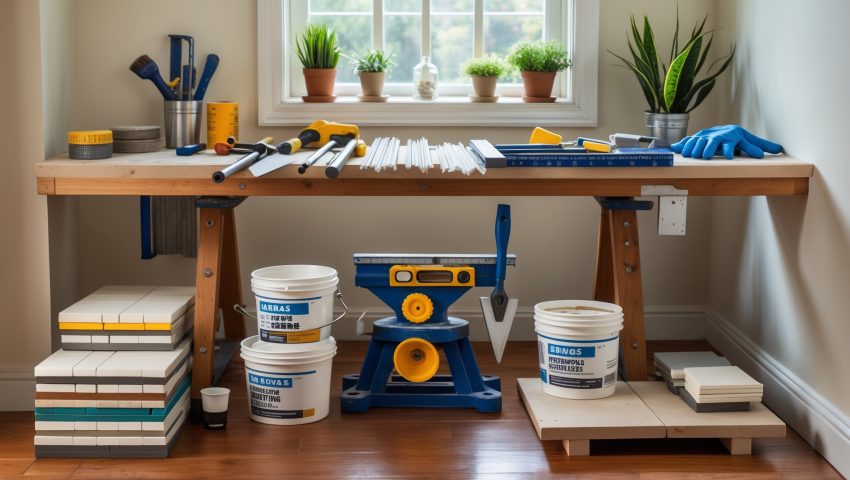
Introduction: Why the Right Tools Matter for DIY Tile Success
Whether you’re dreaming of a fresh kitchen backsplash, a sleek bathroom floor, or a bold accent wall, DIY tile installation remains one of the most satisfying home improvement projects. Yet, for many U.S. homeowners, the path from inspiration to a flawless, long-lasting finish is paved with unexpected challenges—most of which boil down to tool selection and proper setup. The right tools not only ensure clean cuts and perfectly spaced lines, but also make the process safer, faster, and far less frustrating. In this guide, we’ll walk you step-by-step through the essential tools needed for DIY tile installation, explain how to choose and use them, debunk common tool myths, and help you avoid expensive rookie mistakes. Whether you’re tiling a small powder room or tackling a full kitchen overhaul, this article arms you with the practical knowledge and confidence to get professional-looking results—without blowing your budget or your patience.
Understanding the Tile Installation Process
Before diving into the toolkit, it’s crucial to understand the stages of a typical tile installation. Each step demands specific tools and precise techniques:
- Surface preparation
- Layout and dry fitting
- Cutting and trimming tiles
- Applying adhesive and setting tiles
- Grouting and sealing
- Cleaning and finishing
Knowing what comes next helps you avoid last-minute tool runs and costly delays.
Must-Have Tools for Every DIY Tiling Project
1. Measuring and Layout Tools
- Tape Measure: Invest in a sturdy, 25-foot tape measure for accurate room and tile measurement.
- Carpenter’s Pencil or Fine-Tip Marker: For marking cut lines and tile placement.
- Chalk Line: Essential for snapping straight reference lines on floors and walls.
- Spirit Level (2–4 ft): Ensures even tile placement and prevents unsightly slopes or dips.
- Square (Speed Square or Framing Square): For marking precise right angles at corners and edges.
2. Cutting and Shaping Tools
- Manual Tile Cutter: The workhorse tool for straight cuts on ceramic and porcelain tiles. Choose a model rated for your tile size and thickness.
- Wet Saw: Needed for larger projects, thick tiles, or specialty materials like natural stone. Opt for a rental if purchasing doesn’t fit your budget.
- Tile Nippers: For shaping small notches or curves, especially around pipes and corners.
- Hole Saw or Diamond Drill Bits: Required for making holes for plumbing, outlets, or fixtures.
- Rubbing Stone: Smooths sharp edges after cuts for safety and a professional finish.
3. Setting and Spacing Tools
- Notched Trowels: The size and notch shape depend on your tile and adhesive—consult manufacturer recommendations for the right fit.
- Tile Spacers: Available in various widths (1/16″–1/4″) to ensure even grout lines and a uniform look.
- Rubber Mallet: Gently taps tiles into place without cracking them.
- Kneepads: Essential for comfort and safety during long installations on floors.
4. Grouting and Finishing Tools
- Rubber Grout Float: Distributes grout evenly and presses it into joints without scratching tiles.
- Grout Sponge: For wiping excess grout and smoothing lines before it dries.
- Bucket and Mixing Paddle: Use a heavy-duty bucket and a paddle attached to a drill for mixing thinset and grout to the correct consistency.
- Caulk Gun: For applying silicone caulk along edges, corners, and transitions where movement is expected.
5. Safety Gear
- Safety Glasses: Protects eyes from flying shards during cutting and mixing.
- Dust Mask or Respirator: Especially important when cutting tile or mixing powdered materials.
- Gloves: Safeguards hands from sharp edges, adhesives, and irritants.
Choosing the Right Tools: Quality vs. Budget
One of the biggest mistakes DIYers make is skimping on tools, mistaking all tile cutters or trowels as equal. Here’s how to balance cost and quality:
- Buy the Best You Can Afford: For essential items (manual tile cutter, notched trowel, grout float), opt for mid-grade or higher—they’ll pay for themselves in accuracy and reduced frustration.
- Rent When Practical: Wet saws, large mixing drills, and hole saws are often better rented than bought, especially for one-off projects.
- Avoid Cheap Kits: Low-cost, all-in-one tile tool kits often include flimsy trowels and unreliable cutters. Assemble your toolkit piece by piece.
- Test Tools Before Start: If possible, make a few test cuts or practice with your trowel before committing to your real tiles.
Tool Setup: Preparing Your Workspace
Organizing for Efficiency
A cluttered workspace leads to mistakes and wasted time. Before you mix adhesive, ensure:
- All tools are cleaned, accessible, and within arm’s reach.
- Cutting tools are set up on a stable, protected surface away from your install area.
- Safety gear is on and ready before using any power tools.
Protecting Your Surroundings
- Lay down drop cloths or plastic sheeting to catch debris and splashes.
- Seal off adjacent rooms with plastic to contain dust, especially when cutting indoors.
- Keep a trash bin and extra rags handy for quick cleanup.
Step-by-Step: Using Each Essential Tool
Manual Tile Cutter
Mark your cut line, align the tile in the cutter, score the surface with a steady push, and snap the tile down. Practice on scrap tiles until you get a clean break every time.
Wet Saw
Fill the reservoir with water, adjust the fence for your cut width, and guide the tile slowly into the blade. Always wear safety glasses and never force the tile—let the blade do the work.
Tile Nippers
Use for small notches or curves—bite off tiny bits at a time to avoid cracking. Smooth rough edges with a rubbing stone.
Notched Trowel
Scoop adhesive onto your surface, spread evenly, then use the notched edge to comb ridges. The correct notch size ensures proper adhesive coverage without excess squeeze-out.
Tile Spacers
Insert spacers as you go to maintain consistent grout widths. Remove them before grout sets to prevent them being trapped inside the joints.
Grout Float and Sponge
Work grout diagonally across joints with the float, pressing firmly. Wipe excess with a damp sponge before it dries, rinsing the sponge frequently for a clean finish.
Common Tool Mistakes—and How to Avoid Them
- Using the Wrong Trowel Size: Too small and tiles won’t adhere properly; too large wastes adhesive and causes messy squeeze-out. Always match trowel notch to tile size.
- Skipping the Wet Saw: Manual cutters can’t handle thick, textured, or natural stone tiles. Rent a wet saw rather than risk ruined tiles.
- Neglecting Safety Gear: Grout, tile dust, and sharp edges are no joke. Always gear up, especially with power tools.
- Improper Mixing: Mixing thinset or grout by hand leads to lumps and weak bonds. Use a mixing paddle attached to a drill for smooth, consistent results.
- Not Cleaning Tools Promptly: Adhesive and grout set quickly; clean all tools and buckets before they harden to avoid permanent damage.
Pro Tips for Tool Maintenance and Storage
- Clean all tools immediately after use with water and a stiff brush. Dried thinset or grout can ruin trowels and floats.
- Inspect blades and cutters before each use; replace worn or chipped parts for best results.
- Store manual cutters, trowels, and floats in a dry area to prevent rust and corrosion.
- Bundle spacers and small accessories in clear containers or zip bags for easy access on your next project.
Budgeting for Your Tile Tool Kit
Here’s a sample cost breakdown for a typical DIY tile project (prices as of 2024):
- Manual tile cutter: $30–$80 (buy)
- Wet saw: $50–$100/day (rent)
- Notched trowel: $10–$20
- Grout float: $8–$15
- Tile spacers: $5–$10
- Kneepads: $15–$30
- Mixing paddle: $8–$15
- Safety gear (glasses, mask, gloves): $20–$40
Total estimated toolkit investment for a standard room: $100–$200 (excluding tile and adhesive). For smaller projects, costs can be even lower—especially if you borrow or rent specialty tools.
Region-Specific Considerations
Some U.S. regions have unique tiling challenges:
- Cold climates: Invest in heated floor mats and compatible tools for bathroom or basement tiling.
- High-humidity regions (e.g., Southeast): Use waterproofing tools such as paint-on membranes and specialized trowels.
- Historic homes: Prepare for irregular surfaces; consider flexible adhesives and a wider range of spacers.
Frequently Asked Questions About DIY Tile Tools
Q: Can I use a manual cutter for glass mosaic tiles?
A: Manual cutters work for some mosaics, but a wet saw with a glass-rated blade delivers cleaner results with fewer chips.
Q: What’s the best tool for small, intricate cuts?
A: Tile nippers and a rotary tool with a diamond bit are ideal for detailed work around outlets or plumbing.
Q: Do I need a laser level?
A: Not essential, but a laser level can speed up large or multi-wall layouts—especially for walls or backsplashes.
Conclusion: Set Yourself Up for Tiling Success
Tackling your own tile installation can be a deeply rewarding way to update your home—and the right toolkit is your ticket to professional results. By investing in quality tools, setting up your workspace for efficiency, and understanding each tool’s purpose, you’ll sidestep messes, misaligned tiles, and costly do-overs. Remember: it’s not about owning the most expensive gadgets, but about choosing the right gear for your specific project and using it confidently. Don’t underestimate the value of good safety equipment and regular tool maintenance—they’ll keep your project on track and your results looking sharp for years to come.
As you plan your next tiling adventure, use this guide as your reference for assembling a practical, streamlined toolkit tailored to your space, tile type, and skill level. And if you hit a snag, don’t hesitate to consult local experts or specialty retailers—they can offer region-specific advice and help you avoid common pitfalls. With a little preparation and the right tools at hand, your DIY tile project can add value, beauty, and pride to your U.S. home. Happy tiling!
If I run into uneven spots while prepping my surface, do I need any special tools beyond what’s listed here?
For uneven spots, you might need a floor patching compound and a flat trowel or a putty knife, in addition to the standard tools listed. These help fill and smooth low areas before tiling for a level surface.
Could you explain how to choose the right kind of spirit level for tile projects, and is the 2–4 foot range enough for larger areas like a kitchen floor?
For tile projects, choose a sturdy, easy-to-read spirit level with clear vials. A 2–4 foot level works for most jobs, but for larger kitchen floors, a longer 4-foot or even 6-foot level ensures greater accuracy over bigger areas.
If I’m only tiling a small powder room, do I still need a chalk line and a spirit level, or can I get by with just a tape measure and square?
Even for a small powder room, a spirit level is important to keep your tiles straight and even. A chalk line is helpful but not strictly necessary for such a small space if you measure and mark carefully with your square and tape measure.
Is there a beginner-friendly way to ensure my chalk line stays accurate throughout the project, especially in a small bathroom where space is tight?
To keep your chalk line accurate in a small bathroom, regularly check your reference points with a measuring tape and snap shorter lines section by section. Secure one end with painter’s tape if you can’t use a nail or tack.
Do you have suggestions for the most budget-friendly but reliable brand of 2 to 4 foot spirit levels, especially for someone just starting out?
For beginners looking for quality on a budget, consider brands like Stanley or Empire for 2 to 4 foot spirit levels. They offer reliable accuracy and durability without a high price tag, making them popular choices for DIY projects.
Is there a big difference between using a speed square versus a framing square for marking angles in smaller spaces like a bathroom?
Yes, a speed square is usually more convenient for marking angles in tight spaces like bathrooms. It’s smaller, easier to handle, and great for quick angle checks, while a framing square is bulkier and better suited for larger projects.
Could you clarify which step in the installation process tends to be the trickiest for first-timers and what tool usually makes the biggest difference at that stage?
Cutting tiles accurately is often the trickiest step for beginners, as getting clean edges can be challenging. A high-quality tile cutter or wet saw usually makes the biggest difference here, helping achieve precise cuts and a professional finish.
Is there a big difference between using a speed square versus a framing square when marking tile corners, or does it just depend on what’s available?
Both a speed square and a framing square can help mark tile corners accurately, but a speed square is usually more compact and easier to handle for small tiles. Either tool works, so use whichever you have on hand.
When laying out a backsplash in a kitchen, is a regular carpenter’s pencil precise enough or should I look for a special tile marker for clean cut lines?
A regular carpenter’s pencil works for basic layout, but a fine-tip tile marker or grease pencil gives more precise, visible lines on tile surfaces, helping ensure cleaner, more accurate cuts, especially for detailed work.
If I’m tiling a small bathroom floor, how do I know when I really need a chalk line compared to just using a regular level and tape measure?
A chalk line helps keep your tiles aligned, especially in larger or oddly shaped spaces. For a small, square bathroom, a level and tape measure may be enough if you double-check your lines, but a chalk line ensures straighter starting points.
For someone on a tight budget, which of these essential tile tools could I reasonably borrow or rent instead of buying outright?
For a tight budget, consider borrowing or renting a tile cutter, wet saw, and tile spacers, as these are used mainly during installation. Smaller items like trowels, sponges, and buckets are usually affordable and worth buying.
How much time should I set aside for surface preparation versus actually laying and grouting the tiles in a medium-sized kitchen?
For a medium-sized kitchen, surface preparation can take 1–2 days, especially if repairs or leveling are needed. Laying and grouting tiles usually takes another 2–3 days. Preparation is just as important as the tiling itself, so plan accordingly.
Could you clarify what the best budget-friendly options are for surface prep tools if I’m working on an older bathroom floor with uneven spots?
For prepping an older, uneven bathroom floor, a long-handled scraper and handheld floor sander are affordable essentials. A self-leveling compound with a flat trowel can help even out low spots without breaking the bank.
Do you have any tips for surface prep if you find some minor uneven spots after setting up your level? Is there a budget-friendly fix?
For small uneven spots, you can use a patching compound or floor leveler—these are usually affordable at hardware stores. Apply it with a putty knife, let it dry, and sand smooth before tiling. This helps ensure a flat surface.
How much should I budget for these essential tools if I don’t have any of them yet?
You should budget around $200 to $400 for the basic essential tools if starting from scratch. Prices vary based on brands and tool quality, but this range covers everything you need for a standard DIY tile installation.
If I’m tiling a small powder room, is it worth investing in all these measuring tools, or are there affordable alternatives that still give professional-looking results?
For a small powder room, you don’t need every specialized tool. A good tape measure, a reliable level, and a simple square are usually enough. Affordable plastic tile spacers and a basic chalk line can help you achieve clean, professional results.
How do I know when I should use a spirit level versus a chalk line, especially when working with wall tiles around uneven surfaces?
Use a spirit level to ensure each tile or row is perfectly horizontal or vertical, especially on uneven surfaces. A chalk line helps you mark long, straight guidelines over a larger area. For walls with bumps, check each row with the spirit level as you go.
If I’m only tiling a small bathroom, do I really need a chalk line and a spirit level, or can I get by with just a ruler and regular level?
For a small bathroom, a regular level can work if it’s accurate, but a spirit level gives more precise results. A chalk line helps keep tiles straight, so it’s recommended, but for very small spaces, careful measuring with a ruler can sometimes suffice.
For homeowners on a tight budget, are there cost-effective tools that can be substituted for a speed square or is it worth investing in a dedicated one?
A speed square is affordable and very useful, but if your budget is tight, you can substitute it with a simple ruler and a right-angle object like a hardcover book. However, a dedicated speed square does make measuring and marking much easier and more accurate.
If I’m only doing a small accent wall, can I get by with basic measuring tools from a big box store, or is it worth investing in higher quality ones for my first project?
For a small accent wall, basic measuring tools from a big box store should be sufficient. Just make sure your tape measure and level are accurate and sturdy, and you’ll be all set for your first project.
For surface preparation, what tools are best for ensuring an older bathroom floor is truly level before setting tiles?
To check and level an older bathroom floor, use a 4-foot spirit level or laser level to find uneven spots. A straightedge and pencil help mark high and low areas. For adjustments, a floor patching compound and trowel are essential.
Could you elaborate on how to choose between a speed square and a framing square for tile layouts, and whether one is better for beginners?
A speed square is compact, easy to handle, and great for marking quick 90- and 45-degree angles, making it beginner-friendly for most tile layouts. A framing square is larger and better for bigger projects, but can feel cumbersome for small tile work.
Could you explain which tile cutting tool is best for beginners who are just doing a small bathroom floor project?
For beginners working on a small bathroom floor, a simple manual tile cutter is usually the best choice. It’s easy to use, affordable, and ideal for straight cuts on ceramic or porcelain tiles.
How can I avoid common mistakes during surface preparation if my subfloor isn’t perfectly even before starting to tile?
To avoid issues, use a self-leveling compound to even out dips and bumps in your subfloor. Clean thoroughly, patch cracks, and let everything dry before tiling. This creates a smooth, stable surface for your tiles.
For surface preparation, do you recommend any particular type of underlayment or primer for beginners to avoid common issues with tile adhesion?
For beginners, using a cement backer board as underlayment is a dependable choice for most tile projects. Pair it with a quality latex-based primer to help ensure strong tile adhesion and reduce the risk of issues like cracking or lifting.
The article mentions debunking tool myths—could you share an example of a common tile tool myth and how it might trip up beginners?
One common myth is that you only need a basic manual tile cutter for all jobs. In reality, thicker or porcelain tiles often require a wet saw for clean cuts, so relying on just one tool can make your project much harder.
If I already have a basic level, is a 2-4 foot spirit level really necessary, or can I get away with something shorter for a small bathroom floor?
For a small bathroom floor, a shorter level can work, but a 2-4 foot spirit level gives you better accuracy over longer spans. If your current level is much shorter, check in sections to ensure the floor stays even.
When it comes to surface preparation, are there any specialized tools you recommend for older homes where walls or floors might not be perfectly level?
For older homes with uneven surfaces, a long spirit level, a straightedge, and a self-leveling compound are especially helpful. You might also consider a notched trowel for applying compound and a rubber float for smoothing out small imperfections.
How do I know when to use a spirit level versus a chalk line during tile layout and installation?
Use a chalk line to mark straight reference lines on your surface before you begin tiling, ensuring your layout is accurate. Use a spirit level throughout installation to check that tiles are being set perfectly level and even as you work.
Can you explain a bit more about the surface preparation stage? I’m worried I might overlook something important before tiling.
Surface preparation is key for lasting tile work. Ensure the area is clean, dry, and flat. Remove old adhesives, repair cracks or holes, and check for levelness. Sometimes, installing a backer board is needed for extra stability and moisture protection.
For a small bathroom floor, which measuring and layout tools are truly essential versus just nice to have?
For a small bathroom floor, you’ll definitely need a tape measure, a chalk line, and a carpenter’s square for accurate measuring and layout. Tile spacers and a pencil are essential, while laser levels are helpful but not strictly necessary for such a small space.
Are there any budget-friendly alternatives for a quality 2–4 ft spirit level, or will a cheaper one affect my results too much?
A cheaper spirit level can work if you check its accuracy before use, by testing it on a known flat surface and flipping it to compare readings. Still, quality levels tend to be more reliable for precise tile work.
For beginners, how do you know if your surface prep is good enough before laying the first tile, or are there specific warning signs to watch for?
Before tiling, make sure your surface is clean, dry, flat, and free of cracks. Warning signs include bumps, dips, loose debris, or dampness. If you notice any uneven spots or movement, fix them first to avoid issues with your finished tile.
For a small bathroom floor project, do I really need both a framing square and a speed square, or will one suffice for laying out the tile pattern accurately?
For a small bathroom floor, a single square—either a framing square or a speed square—should be enough to ensure accurate tile layout. The framing square offers a larger surface, but both tools serve the same purpose for layout.
You mention both a spirit level and a chalk line for layout. Are there scenarios where one is more helpful than the other, especially for a first-time tiler working on uneven floors?
A chalk line is best for marking long, straight layout lines across your surface, which helps with overall tile alignment. A spirit level is crucial for checking and correcting tile flatness, especially on uneven floors. Use both for best results: chalk line for layout, spirit level for leveling.
For a beginner tackling a kitchen backsplash, are there any tools from your essential list that could be skipped or substituted with more DIY-friendly alternatives?
For a kitchen backsplash, you can often substitute a manual tile cutter for a wet saw, use a basic notched trowel, and try spacers or even pennies for grout lines. A rubber float is still best for grouting, but a grout sponge works for small areas.
How do I know if my surface prep is good enough before I start laying the tiles, and what should I watch out for to avoid early mistakes?
Your surface should be clean, dry, flat, and free from dust or grease. Check for dips or high spots using a level. Repair cracks or holes and ensure everything is fully set before tiling to prevent uneven tiles or future cracking.
Do you have any tips for choosing between a speed square and a framing square for tricky corners during tile layout, or are they pretty much interchangeable for most DIY projects?
A speed square is handy for quick 90-degree marks and tight spaces, while a framing square covers larger layouts and checks for bigger right angles. For most tile projects, a speed square should be enough unless you’re working with wide or complex layouts.
Are there specific features I should look for in a spirit level or tape measure to make tile installation easier for beginners?
For tile installation, choose a spirit level with clear, easy-to-read vials and a sturdy, straight edge. For a tape measure, look for one with large, bold numbers and a locking mechanism to help you measure accurately and work more efficiently.
The article mentions avoiding rookie mistakes—could you give examples of common tool-related errors beginners make when cutting or spacing tiles?
Common mistakes include using dull tile cutters that cause uneven edges, not measuring tiles accurately before cutting, and failing to use proper tile spacers, leading to inconsistent grout lines. Always check tool quality and double-check measurements for best results.
You mention a 25-foot tape measure for accuracy—is that size really necessary if I’m just tiling a small kitchen backsplash?
A smaller tape measure, like a 12- or 16-foot one, will work perfectly for a small kitchen backsplash. The 25-foot size is more useful for larger spaces, but it’s not essential for your project.
Is there a particular brand or type of spirit level you recommend for beginners, or will any basic model from a hardware store work for tile projects?
A basic spirit level from any hardware store is usually sufficient for tile projects, especially for beginners. Just ensure it’s sturdy, easy to read, and at least 24 inches long for good accuracy.
For a first-timer, is there a big difference between using a manual tile cutter versus a wet saw for standard ceramic tiles in a kitchen backsplash?
For a kitchen backsplash with standard ceramic tiles, a manual tile cutter is usually sufficient and easier for beginners. A wet saw gives cleaner cuts on thicker or tricky tiles, but for most backsplash jobs, a manual cutter works well and is simpler to use.
Is there a preferred type of spirit level or chalk line that works best for wall tiles versus floor tiles?
For wall tiles, a longer spirit level (24 inches or more) helps ensure vertical alignment, while for floors, a shorter level offers better maneuverability. Any quality chalk line works for both, but use contrasting chalk color for visibility on your tile surface.
You mention debunking common tool myths—could you share a couple of those myths specific to tile installation and how they trip up beginners?
One common myth is that a standard utility knife can replace a tile cutter—it can’t, as precise cuts need a proper tile cutter or wet saw. Another is thinking you don’t need spacers, but skipping them leads to uneven grout lines.
For a small bathroom floor, do I really need a 25-foot tape measure or would a shorter one work just as well?
For a small bathroom floor, a shorter tape measure—like a 12- or 16-foot one—will work just fine. You only need to measure the room’s dimensions, so there’s no need for a full 25-foot tape.
Can you explain how to know if my subfloor or wall surface is actually ready for tile, or if I need extra prep tools before starting?
Check that your subfloor or wall is clean, dry, flat, and free of cracks or movement. Surfaces should feel solid with no flex. If you notice unevenness, moisture, or damage, you’ll need extra prep tools like levelers, patching compound, or waterproofing materials.
Is there a particular type or brand of spirit level you suggest for beginners to make sure the tiles come out even?
A 24-inch bubble or spirit level is ideal for tile work. Brands like Stanley or Empire are reliable and easy to read, making them great for beginners ensuring tiles stay level.
Do you have recommendations for budget-friendly versions of these essential tools without sacrificing too much on quality?
Yes, consider brands like QEP for tile cutters and trowels, as they offer good quality at lower prices. For levels and spacers, look for contractor packs at big-box stores—they’re affordable and reliable for most DIY projects.
Could you clarify if a 2-foot or 4-foot spirit level is better for a small bathroom tiling project, or do I really need both?
For a small bathroom, a 2-foot spirit level is usually sufficient for most tile work, especially on walls and tight spaces. However, a 4-foot level can help check for overall flatness on larger areas like the floor, but it’s not strictly necessary.
Could you recommend a specific type or brand of chalk line or spirit level that works well for first-time DIYers in the US?
For beginners, the Stanley FatMax chalk line and the Johnson Level 24-inch spirit level are both reliable, easy to use, and widely available at hardware stores across the U.S. They offer good accuracy and durability for DIY tile projects.
How much should I budget for the essential measuring and layout tools mentioned, and are there any reliable budget-friendly brands you recommend for beginners?
For essential measuring and layout tools like tape measures, chalk lines, and levels, budgeting around $30–$60 should cover quality beginner options. Brands like Stanley, Empire, and Johnson offer reliable, affordable tools perfect for DIY tile projects.
For a small powder room, can I get by with basic versions of these tools, or will I regret not investing in higher-quality options?
For a small powder room, basic versions of tile tools should work fine as long as they’re functional and in good condition. Higher-quality tools are more comfortable and durable, but for a small space, basics usually suffice.
If I’m on a tight budget, are there any tools on your must-have list that you think could be skipped or improvised for a small backsplash project?
For a small backsplash, you can often skip a tile saw and use a manual tile cutter or even a scoring tool and pliers. You might also improvise with household sponges and buckets instead of specialized grout floats and mixing tools.
You mention using a chalk line and a spirit level—do you have any tips for keeping lines straight on older homes where the walls might not be perfectly square?
In older homes, measure from a central reference point instead of relying on walls. Snap a chalk line based on your layout, not the wall. Use the spirit level to check each row and adjust as you go for the straightest lines.
Could you explain how to choose between a speed square and a framing square for a small bathroom tile job? Is one more beginner-friendly?
For a small bathroom tile job, a speed square is usually more beginner-friendly. It’s compact, easy to handle in tight spaces, and great for marking straight lines and checking corners quickly.
How do you decide when to use a speed square versus a framing square during tile layout, or is one generally better for beginners?
A speed square is great for quick, small measurements and marking straight lines, especially for diagonal cuts. A framing square helps with larger layouts and ensuring accurate right angles. Beginners often find the speed square easier for most tile jobs.
For someone new to tiling, is there a big difference between a speed square and a framing square, or will either work for measuring corners?
Both tools measure corners, but a speed square is smaller and easier to handle for tile projects, while a framing square is larger and often used for carpentry. For tiling, a speed square is usually more convenient for marking straight lines and 90-degree angles.
You mention avoiding expensive rookie mistakes with the right tools—could you suggest cost-effective starter options for someone on a tight budget?
Absolutely! For a budget-friendly start, consider a manual tile cutter, a basic notched trowel, a rubber grout float, and a small level. These essentials are affordable and widely available at most hardware stores.
If my bathroom floor isn’t completely level, will a standard 2–4 ft spirit level be enough, or should I consider any other leveling tools before starting the tile work?
A 2–4 ft spirit level works for checking general flatness, but for larger bathroom floors, a longer level or a straightedge can help spot uneven spots more accurately. You might also consider a self-leveling compound if there are noticeable dips or slopes.
If I only plan to do a small bathroom floor, do I still need all the layout and measuring tools listed, or are there ways to simplify the toolkit for a quick project?
For a small bathroom floor, you can simplify. A good tape measure, pencil, and a straight edge or chalk line should be enough for basic layout and measuring. You don’t need every tool listed for a quick, straightforward project.
If I already have a basic toolkit, which of these tiling tools would you prioritize buying first to avoid rookie mistakes?
If you already have a basic toolkit, prioritize getting a quality tile cutter, a notched trowel, a tile spacer set, and a grout float. These will help you achieve precise cuts, even spacing, and smooth grout lines.
At what stage should I start sealing the tiles, and is there a preferred sealing method for beginners?
Sealing should be done after the tiles are fully set and the grout has cured, usually 48–72 hours after grouting. For beginners, using a spray-on sealer is easy and helps ensure even coverage.
When you talk about avoiding costly delays by understanding each stage, how much extra time should I plan between steps like adhesive setting and grouting?
You should allow at least 24 hours for tile adhesive to fully set before starting grouting. This helps prevent shifting or uneven tiles, reducing the chance of issues that could cause delays.
If my wall surface isn’t perfectly flat during the preparation stage, which tools from your list help the most with troubleshooting unevenness before tiling begins?
To address uneven wall surfaces, use a straightedge or level to identify high and low spots. A trowel or putty knife will help you apply patching compound, and a sanding block is great for smoothing patched areas before you start tiling.
You mention using a chalk line for layouts. Are there any tips for snapping clean lines on textured walls, or does it only work well on smooth surfaces?
Chalk lines can work on textured walls, but for best results, press the line firmly against the surface and snap quickly. Using more chalk helps the line show up, and going over the mark with a pencil can improve visibility on rough textures.
Could you suggest budget-friendly options for essential tile cutting tools, especially for a first-time DIYer?
For first-time DIYers on a budget, consider a manual tile cutter for straight cuts and a simple handheld tile nipper for curved or small cuts. Both are affordable and easy to find at most hardware stores.
If I’m tiling a small powder room, which of the essential tools could I consider renting instead of buying to save costs?
For a small powder room project, you might consider renting a tile cutter or wet saw, as these are often pricey and only needed briefly. Most of the other essential tools, like trowels and spacers, are inexpensive and worth buying.
When you mention surface preparation, what specific tools are needed for getting floors or walls ready before laying the tiles?
For surface preparation, you’ll need a scraper or putty knife to remove old adhesives, a broom or vacuum for cleaning, a level to check flatness, a sponge or damp cloth for dust, and a patching compound plus trowel for filling holes or cracks.
Do you have any tips on choosing between a speed square and a framing square, especially for someone tackling their first backsplash?
For a first backsplash, a speed square is usually easier to handle and perfect for marking quick, accurate 90-degree lines on smaller tiles. A framing square is larger and better for bigger projects like flooring or walls.
What’s the best way to avoid costly delays if a tool breaks or turns out to be the wrong type in the middle of a project?
Keep spare essential tools on hand, or rent backups if possible. Before starting, double-check your tool list and inspect all equipment. If a tool breaks, having extras or quick access to a local hardware store can help you stay on schedule.
For someone on a tight budget, which tools from your must-have list could be borrowed or rented instead of purchased?
For a tight budget, consider borrowing or renting larger or less frequently used tools like a tile cutter, wet saw, and grout float. Smaller hand tools such as a tape measure and sponge are usually inexpensive and can be purchased.
If my walls aren’t perfectly flat during surface preparation, do I need any extra tools beyond what you listed?
If your walls aren’t perfectly flat, consider using a straightedge or long level to check for high and low spots. You might also need a patching compound and a trowel to fill and smooth uneven areas before tiling.
Can you recommend affordable brands or types of spirit levels and squares suitable for a small tiling job in a powder room?
For a small powder room tiling job, look for brands like Stanley, Johnson, or Empire—these offer budget-friendly spirit levels and squares. Their 12-24 inch levels and 6-inch combination squares are accurate and easy to find at most hardware stores.
For someone trying not to overspend, which of these essential tools would you recommend renting instead of buying outright?
For budget-conscious DIYers, consider renting tools like a tile saw, wet saw, or tile cutter, since these are typically expensive and only needed for the project duration. Basic hand tools such as trowels or sponges are usually affordable to buy.
How much should I expect to spend on all the measuring and layout tools you listed if I’m only doing a small backsplash project?
For a small backsplash project, expect to spend around $30 to $60 on essential measuring and layout tools like a tape measure, level, chalk line, and pencil. You can often find budget-friendly options at local hardware stores.
You mention a 25-foot tape measure—would a shorter tape work for small rooms, or is it really worth investing in the longer one for DIY tiling?
A shorter tape will work fine for small rooms, but a 25-foot tape measure is more versatile for future projects. If you expect to tackle only small spaces, a shorter one is perfectly acceptable for tile work.
If I run into uneven surfaces during the preparation stage, what tools or techniques should I use to get things properly leveled before tiling?
For uneven surfaces, use a long level or straightedge to spot high and low areas. A floor patch or self-leveling compound helps fill dips, while a trowel or concrete grinder can smooth out high spots. Always let leveling compounds fully cure before tiling.
How much should I budget for the essential tools you listed if I have none of them already? Are there quality brands you recommend that won’t break the bank?
For a basic DIY tile installation toolkit, expect to spend around $150 to $300. Brands like QEP, Marshalltown, and Rubi offer reliable tools at reasonable prices. Shopping at big-box stores often yields good deals for beginners.
Do you have recommendations for budget-friendly tile cutting tools that still deliver clean, professional-looking cuts for a kitchen backsplash project?
For a kitchen backsplash, a manual tile cutter is a budget-friendly option that can provide clean, straight cuts on ceramic or porcelain tiles. For small specialty cuts, a quality tile nipper is useful and affordable. Both are great for DIY projects.
For those on a tight budget, which measuring tools from your list are absolutely essential, and which can be improvised or borrowed for a small backsplash job?
For a small backsplash, a basic tape measure and a pencil are the essential measuring tools. You can improvise a straightedge using a ruler or level, and a carpenter’s square can often be borrowed if precise angles are needed.
The article mentions avoiding expensive rookie mistakes—are there any layout or measuring tools that are worth the splurge versus ones where a basic version will do?
Investing in a quality tile cutter and a laser level is worth it for precise layouts and cuts. However, basic tape measures, spacers, and pencils work just fine—no need to splurge on those.
If I need to pause my tile project for a couple of days, what’s the best way to safely store or clean tools like the chalk line and carpenter’s pencil to avoid issues when I resume?
Wipe off your chalk line to remove excess chalk and store it in a dry place to prevent moisture damage. For your carpenter’s pencil, sharpen it if needed and keep it with your other tools in a sealed container or toolbox to prevent loss or breakage.
Is there a particular type or brand of chalk line that works best for tiling, especially on textured walls or floors?
For tiling, especially on textured surfaces, choose a chalk line with a thicker, bright-colored line and durable chalk. Brands like Tajima and Irwin are popular among professionals, as they offer crisp lines and good visibility even on uneven surfaces.
Could you explain more about what makes a good chalk line for tile work? Are there features I should look for as a beginner?
A good chalk line for tile work should have bright, visible chalk, a durable reel, and a solid hook for secure anchoring. For beginners, look for one that’s easy to refill and has a smooth rewind mechanism to prevent tangling.
Do you recommend buying or renting tile cutting tools for a one-time bathroom project to keep costs down?
For a single bathroom project, renting tile cutting tools is usually more cost-effective than buying. You’ll save money and still get professional-quality equipment, especially if you need a wet saw or specialty cutter just for this one job.
If I’m mainly tiling a small bathroom floor, are all of these measuring and layout tools necessary or is there a way to streamline without sacrificing quality?
For a small bathroom floor, you can simplify by using just a tape measure, a carpenter’s square, and a chalk line or straight edge. These core tools are usually enough to get accurate measurements and a good layout without extra gadgets.
For someone who’s never used a chalk line before, could you explain how to use it for floor versus wall tiling to get straight lines?
For floors, anchor the chalk line at your starting edge and snap it across the surface to mark straight tile rows. On walls, use a level to guide the line horizontally or vertically before snapping, ensuring your tiles stay true.
You mention avoiding expensive rookie mistakes—could you share which tool is most commonly overlooked but really makes a difference in the end result?
A notched trowel is often overlooked, but it’s essential for applying tile adhesive evenly. Using the right size and type helps tiles stick properly and prevents uneven surfaces or gaps, making a big difference in your finished project.
You mention using a chalk line and spirit level for straight lines, but does one work better than the other if my walls aren’t perfectly square?
A chalk line is best for marking long, straight reference lines on uneven walls or floors, while a spirit level helps you ensure your lines are actually level or plumb. For walls that aren’t square, use both together for the most accurate layout.
Can you recommend budget-friendly measuring or layout tools that still give professional results for a small bathroom project?
For a small bathroom, consider a basic steel tape measure, a plastic or aluminum T-square, and a snap chalk line. These are affordable but reliable for accurate tile layouts and measurements, giving professional-looking results without breaking the bank.
You mention making sure the surface is prepped before starting—what tools are most essential for that step specifically, especially for older bathroom floors?
For prepping older bathroom floors, you’ll need a sturdy scraper for removing old adhesive, a pry bar for lifting old tiles, a utility knife for cutting away debris, a vacuum or broom for cleaning dust, and a level to check for flatness.
For a beginner, what’s the most common tool-related mistake during the layout or dry fitting stage that I should watch out for?
A common mistake is not using a measuring tape or chalk line properly, which can lead to uneven or crooked tile lines. Always double-check your measurements and use spacers to maintain consistent gaps between tiles.
If I’m only tiling a small backsplash, can I get by with basic hand tools, or are there any professional-grade tools that are still worth investing in for a small job?
For a small backsplash, basic hand tools like a notched trowel, tile cutter, and grout float usually suffice. However, investing in a good quality tile cutter can make cleaner cuts and save frustration, even for small projects.
Can you explain a bit more about how to use a chalk line correctly on walls, especially for a backsplash project?
To use a chalk line for a backsplash, mark your start and end points along the wall where you want your first tile row. Hold the chalk line tight between these points, snap it against the wall, and you’ll have a straight guide for tiling.
Can you elaborate on the differences between a speed square and a framing square for tile layouts? Is one better suited for beginners working on small spaces?
A speed square is smaller, easier to handle, and great for quick 90-degree marks in tight spaces, making it ideal for beginners. A framing square is larger and better for big layouts, but can be awkward in small areas.
Does the article recommend a specific type or brand of chalk line for beginners, or are all chalk lines about the same for home projects?
The article doesn’t recommend a specific type or brand of chalk line. It suggests that most basic chalk lines work well for home projects, especially for beginners.
I noticed you mentioned both a speed square and a framing square for marking right angles. Is one better suited for beginners, or does it depend on the size of the tiling project?
A speed square is usually easier for beginners because it’s compact and simple to use, especially on small or medium tiles. A framing square works better for larger projects or bigger tiles where you need longer, straighter lines.
For homeowners on a tight budget, are there any reliable alternatives to chalk lines or speed squares that still ensure accurate tile placement?
For tight budgets, you can use a tightly stretched string as a chalk line substitute and a simple homemade cardboard or wooden square in place of a speed square. Both can help maintain straight lines and right angles for accurate tile placement.
Can you explain how to choose between a speed square and a framing square for tile layout, or do you really need both for small bathroom projects?
For small bathroom tile projects, a speed square is usually sufficient for marking straight lines and quick right angles. A framing square is larger and more suited for bigger layouts, so you likely don’t need both for smaller spaces.
For a first-time DIYer, which measuring and layout tool would you say is most essential to invest in for avoiding mistakes during tile installation?
A reliable tape measure is the most essential tool for accurate measurements, but pairing it with a good-quality chalk line will help you mark perfectly straight layout lines, which is crucial for avoiding mistakes in your tile installation.
How much should I budget for essential measuring and layout tools if I’m starting from scratch and want decent quality but don’t need pro-grade gear?
For decent quality but non-professional measuring and layout tools, budget around $50 to $100. This should cover a tape measure, chalk line, square, level, and tile spacers from reliable brands suitable for DIY use.
For tile cutting, do you recommend starting with a manual snap cutter or going straight to a wet saw for a small bathroom floor project?
For a small bathroom floor, a manual snap cutter is usually enough for straight cuts and is easier to use. Only consider a wet saw if you have tricky shapes or lots of intricate cuts.
When it comes to layout and dry fitting, how do you handle tricky spots around outlets or corners to avoid too many small tile pieces?
To avoid too many small tile pieces near outlets or corners, start by planning your layout from the center of the room and dry fit tiles before cutting. Adjust your starting point or tile spacing so that cut pieces at edges are as large as possible.
Could you elaborate on which type of spirit level is best for tricky bathroom floor installations, and if a laser level is worth the extra cost for a DIYer?
For tricky bathroom floors, a longer bubble (spirit) level—at least 4 feet—helps check larger areas for flatness. A laser level can speed things up and improve accuracy, especially with slopes and drains, but for most DIYers, a good quality spirit level is usually sufficient.
You mention a 25-foot tape measure for room measurements—is there a version or brand that holds up better after repeated contact with adhesive or grout on DIY projects?
For durability around adhesives and grout, consider brands like Stanley FatMax or Milwaukee, which offer tape measures with reinforced blades and protective coatings. Wiping the blade clean after use also helps extend its lifespan during tile projects.
How accurate does the chalk line need to be when snapping reference lines for a backsplash, and do you recommend any specific brands that hold up well to moisture?
The chalk line should be as straight and precise as possible to ensure your backsplash tiles are evenly aligned. For moisture resistance, consider using blue chalk and brands like Tajima or Stanley, as they tend to perform well in damp areas.
If I’m only tiling a small bathroom floor, are there affordable alternatives to a full-size spirit level that will still help me avoid uneven placement?
For a small bathroom floor, you can use a smaller torpedo level or even a bubble level app on your smartphone. Both options are affordable and will help you keep your tiles even.
Could you clarify if a 2-foot or 4-foot spirit level is better for a small bathroom floor? I want to avoid noticeable dips but keep costs manageable.
For a small bathroom floor, a 2-foot spirit level should be accurate enough to spot dips without being cumbersome or costly. It’s easier to handle in tight spaces compared to a 4-foot level.
For a beginner working on a bathroom floor, do you recommend renting cutting tools or buying them outright since I might only use them once?
If you think you’ll only use tile cutting tools for this one project, renting is usually more cost-effective. Most home improvement stores offer rentals, so you can get quality equipment without the long-term expense.
You mentioned spirit levels—do I really need both a 2-foot and a 4-foot one, or will just one size be fine for a bathroom floor?
For a bathroom floor, a 4-foot spirit level is usually best since it covers more area and helps spot uneven spots more easily. The 2-foot level is handy for tighter spaces, but you can manage with just the 4-foot size.
Can you explain how much of a difference it really makes to use a 2–4 foot spirit level versus a smaller one for laying out tile?
A 2–4 foot spirit level covers more tile at once, helping you spot uneven areas quickly and ensuring a flatter, more even surface. Smaller levels may miss dips or bumps over longer distances, leading to less precise results.
For the surface preparation step, do you recommend any particular type of spirit level or are basic ones from the hardware store usually accurate enough?
A basic spirit level from a hardware store is typically accurate enough for tile installation. Just make sure it’s at least 24 inches long for checking flatness over a wider area and that the vials are clear and not damaged.
How much should I budget for these essential tools if I don’t own any yet, and are there any that make sense to rent rather than buy for a small bathroom project?
You can expect to spend around $150 to $300 for essential tile tools if buying new. For a small bathroom, it often makes sense to rent a wet saw rather than buy, since it’s the priciest tool and used infrequently.
If I’m doing a bathroom floor and a kitchen backsplash, are the basic measuring and layout tools listed here enough, or are there any extra tools I should consider for different surfaces?
The basic measuring and layout tools work for both bathroom floors and kitchen backsplashes. However, for backsplashes, a laser level or a small spirit level can help keep tiles straight on vertical surfaces. For floors, a chalk line is especially useful.
If I’m trying to keep costs low, are there specific measuring or layout tools in your list that are okay to rent instead of buy?
For DIY tile projects, you can usually rent a laser level or tile cutter if you don’t plan to use them often. Basic measuring tools like tape measures and chalk lines are inexpensive and worth buying.
Are there any affordable versions of these essential tools you suggest, or should I avoid the cheapest options to prevent rookie mistakes?
There are affordable versions of most essential tile tools, but avoid the absolute cheapest options—these may break or cause beginner mistakes. Look for mid-range brands with good reviews; they often balance quality and price well for DIY projects.
Do you recommend a manual tile cutter or a wet saw for most DIY projects, especially if I’m just redoing a bathroom floor?
For a bathroom floor, a manual tile cutter is usually enough if you’re working with standard ceramic or porcelain tiles and making straight cuts. If you need to cut thicker tiles or make curved or intricate cuts, a wet saw is helpful.
Can you explain more about how to use a chalk line effectively when marking out tiles on both floors and walls?
To use a chalk line, anchor one end at your starting point, stretch it tightly across the surface to your endpoint, and snap it down to leave a straight chalk mark. This helps ensure your first row of tiles is perfectly aligned on both floors and walls.
For a beginner working on a small bathroom floor, are there any essential tools from your list that you would recommend renting instead of buying?
For a small bathroom project, consider renting a tile wet saw, as it’s usually expensive and not often needed again. Basic tools like trowels, spacers, and a rubber float are affordable and handy to own.
How much time should I expect to spend on the surface preparation stage if I’m redoing an old bathroom floor?
For redoing an old bathroom floor, surface preparation usually takes 2 to 6 hours. This depends on the size of the room, the type of old flooring, and whether repairs or extra cleaning are needed after removal.
For a small bathroom floor project, can a manual tile cutter handle most ceramic tiles or should I rent a wet saw for better results?
For most standard ceramic tiles in a small bathroom, a manual tile cutter should work well for straight cuts. If you need to make curved or intricate cuts, or are using especially thick tiles, renting a wet saw is a better choice.
Are there budget-friendly options for tile cutting tools that still give clean results, or do I really need to invest in pricier ones to avoid mistakes?
You can find affordable tile cutters like manual snap cutters or basic wet saws that provide clean cuts for most DIY jobs. Just ensure the blade is sharp and take your time for best results. Premium tools are more durable, but you don’t always need them for small projects.
How much extra time should I expect the tiling process to take if I haven’t used some of these tools before, like the tile cutter or chalk line?
If you’re new to tools like the tile cutter or chalk line, set aside an extra 2–3 hours for practice and setup. The overall project could take about 20–30% longer until you get comfortable with the equipment.
If I’m only tiling a small bathroom floor, do I still need to buy all the measuring and layout tools listed, or can I get away with just a tape measure and a pencil?
For a small bathroom floor, a tape measure and pencil are usually enough for basic layout and measuring. However, a tile spacer can help keep grout lines even, but you don’t need every specialized tool on the list.
Is there a big difference between a standard spirit level and a laser level when it comes to DIY tile installation, especially for floors?
A laser level offers more accuracy and makes it easier to keep floor tiles straight over large areas, especially compared to a standard spirit level. For small areas, a spirit level works fine, but a laser level really helps with bigger or more complex projects.
Are there any must-have tools you’d suggest for someone on a tight budget, or are there quality affordable alternatives to things like a chalk line or framing square?
If you’re on a tight budget, you can use a taut string in place of a chalk line and a simple ruler or a straight piece of wood instead of a framing square. These alternatives work well for basic tile layouts.
Could you give a rough estimate of what a basic set of these must-have tools might cost for someone starting from scratch, trying to stay on a budget?
A basic set of essential tile installation tools—like a tile cutter, trowel, spacers, level, and rubber float—can cost around $80 to $150 if you shop at budget-friendly hardware stores or online. Prices may vary by brand and quality.
Could you explain more about surface preparation? I always get tripped up at that step and am worried about missing something important before tiling.
Surface preparation is key for a lasting tile job. Make sure your surface is clean, dry, flat, and free of cracks. Remove old adhesives, patch holes, and use a level to check for evenness before starting to lay tiles.
If I’m on a tight budget, which essential measuring and layout tools can I get by with, and which ones are truly non-negotiable for a professional-looking finish?
For a budget-friendly but professional result, you’ll need a tape measure, a carpenter’s pencil, a chalk line, and a spirit level. These are the non-negotiable basics for accurate measuring and layout during tile installation.
You mention avoiding expensive rookie mistakes—could you give examples of common tool-related mistakes first-time tilers make when prepping surfaces?
Common tool-related mistakes include using a worn-out or incorrect trowel size, not having a level or straightedge for checking flatness, and skipping a proper tile cutter. These errors can lead to uneven surfaces and poorly cut tiles.
If I’m only doing a small bathroom backsplash, do I really need a chalk line and spirit level, or can I get by with just a tape measure?
For a small bathroom backsplash, a tape measure can work, but using a spirit level helps keep your tiles straight and looking professional. You can skip the chalk line for such a small area, but a level is still recommended.
Do you have tips for avoiding uneven tile placement if my walls aren’t perfectly straight, even when using a spirit level and chalk line?
When walls aren’t perfectly straight, start tiling from the center of the room or main focal point rather than the wall edge. Use tile spacers and regularly check alignment row by row to keep tiles even despite wall imperfections.
You mention a 25-foot tape measure for accurate measurement—is that overkill for a small bathroom, or is it really necessary even in tight spaces?
A 25-foot tape measure isn’t overkill—it helps ensure you can measure full wall lengths, diagonals, and materials without running short. For small bathrooms, it’s handy but not strictly necessary; a 12- or 16-foot tape measure can also work well.
You mention both a speed square and a framing square for marking right angles—do you prefer one over the other for beginners, or does it depend on the type of tile project?
A speed square is usually easier for beginners because it’s compact and simple to use for marking right angles on smaller tiles. For larger tiles or layouts, a framing square offers more stability and reach. Choose based on your project’s tile size.
What’s the biggest rookie mistake you see people make with tool selection during the surface preparation stage?
One common rookie mistake is choosing the wrong trowel or not using a proper scraper for removing old adhesive. This can leave the surface uneven, making tile installation much harder and less durable.
Could you explain more about what to look for in an affordable chalk line? I’m trying to avoid buying tools I’ll only use once.
When choosing an affordable chalk line, look for one with a sturdy case, easy-to-refill chalk compartment, and a reliable hook for anchoring. Since it’s for occasional use, a basic model will work fine—just make sure it winds smoothly and holds enough chalk.
How much should I budget for these essential tools if I’m starting from scratch and only planning one average-sized bathroom tiling project?
For a single average-sized bathroom, budgeting around $200 to $400 for essential tile installation tools should be sufficient. This covers basics like a tile cutter, trowels, spacers, level, buckets, and safety gear.
For someone tiling an entire kitchen floor, how crucial is it to invest in high-end measuring tools like a laser level versus just using a basic spirit level and chalk line?
For a kitchen floor, a basic spirit level and chalk line are usually sufficient if you work carefully. Laser levels offer added precision and speed, but aren’t strictly necessary for most DIY tiling projects.
When it comes to the measuring and layout tools you listed, is there a way to save money without sacrificing accuracy? Any specific tool brands you recommend for beginners?
You can save money by choosing combination tools, like a tape measure with built-in level or a multi-angle ruler. Brands like Stanley and Empire offer reliable, affordable options for beginners without compromising accuracy.
You mentioned investing in a 25-foot tape measure, but for a smaller backsplash project, is that length necessary or would a shorter tape work?
For a small backsplash project, a shorter tape measure, like a 12- or 16-foot one, will work perfectly. The 25-foot length is more helpful for larger rooms or full flooring projects.
Is there a particular type or brand of chalk line or spirit level you recommend for someone tiling their bathroom for the first time?
For a first-time bathroom tiling project, look for a Stanley or Irwin chalk line—both are reliable and easy to use. For spirit levels, a 24-inch Empire or Stabila level provides accuracy and durability, which are great for beginners.
When cleaning up after grouting, what kind of sponges or cleaning tools work best to avoid leaving haze, and is there a specific technique you suggest for beginners?
A large, damp grout sponge works best for cleaning up grout haze. Wipe in gentle circular motions, rinsing the sponge often. For beginners, change your rinse water frequently and avoid pressing too hard to prevent pulling grout from the joints.
Is there a big difference between using a speed square and a framing square for tile layout, or can I just use whichever one I have?
Both a speed square and a framing square can work for tile layout, but a speed square is easier to handle in tight spaces and for quick, small measurements. For larger layouts, a framing square helps maintain longer straight lines.
You mention using both a chalk line and a spirit level—are there situations where one is better than the other for keeping tiles straight, especially on walls?
A chalk line is great for marking long, straight guidelines quickly, which is helpful for floors or large surfaces. On walls, a spirit level is essential to ensure each row is perfectly horizontal, as walls can be uneven.
For surface preparation, are there specific tools you recommend for older homes where walls or floors might not be perfectly level before tiling?
For older homes with uneven walls or floors, a long level, straightedge, and a floor patching compound or leveling compound are essential. You may also need a trowel for applying the compound and a sanding block to smooth rough spots.
When it comes to choosing a chalk line or spirit level, are there brands or specific features you recommend for first-time DIYers to avoid mistakes?
For first-time DIYers, look for a chalk line with a sturdy case and easy refill mechanism; Stanley and Tajima are reliable brands. For spirit levels, choose one with clear, easy-to-read vials—Stabila and Empire are good options. Magnetic options can also help keep hands free.
How much should I budget for all the basic measuring and layout tools if I’m starting from scratch with no existing supplies?
For basic measuring and layout tools like a tape measure, chalk line, square, spirit level, and pencil, you should budget around $40 to $80 if buying new, depending on the brands and local prices.
You mention a 25-foot tape measure and a 2–4 ft spirit level—is it worth investing in laser levels for better accuracy, or is that overkill for DIYers?
A laser level can make alignment much easier and more precise, especially for larger tile projects or if you’re aiming for perfect lines. For small or simple jobs, a spirit level usually does the trick, but a laser level certainly adds convenience.
Can you give more detail on the differences between a speed square and a framing square for tile layout? Is one better for small bathrooms?
A speed square is smaller and fits easily in tight spaces, making it handier for marking straight tile cuts in small bathrooms. A framing square is larger, better for bigger areas or long layout lines but less convenient in small rooms.
Do you recommend a specific type or brand of chalk line for beginners, especially for tiling bathroom floors where precision is crucial?
For beginners tiling bathroom floors, a self-chalking, retractable chalk line with fine blue chalk is ideal for precision. Brands like Stanley and Milwaukee are user-friendly, reliable, and widely available at most hardware stores.